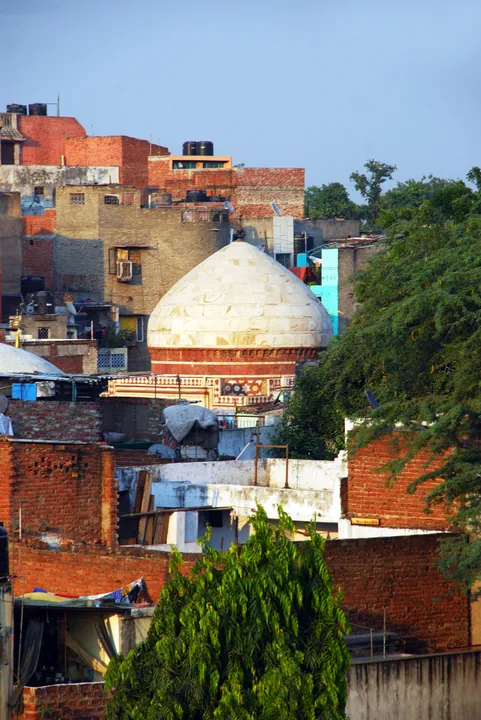
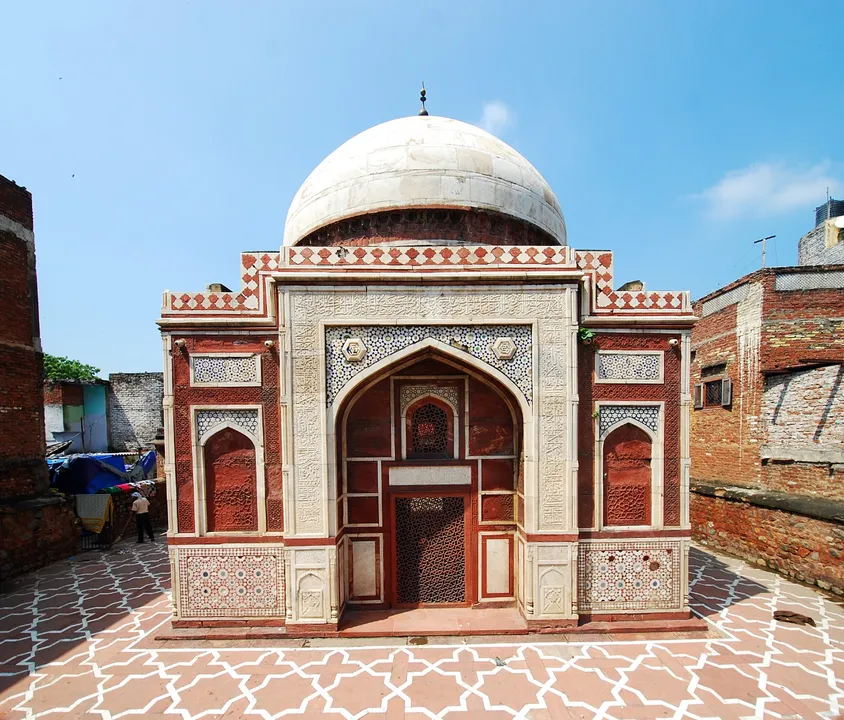
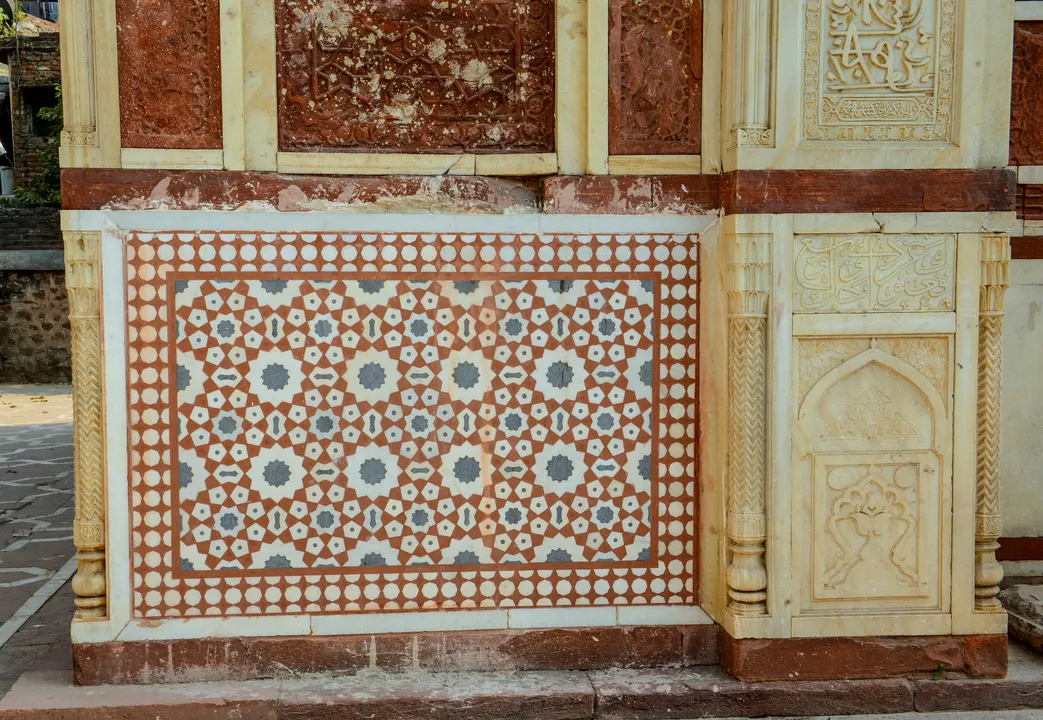
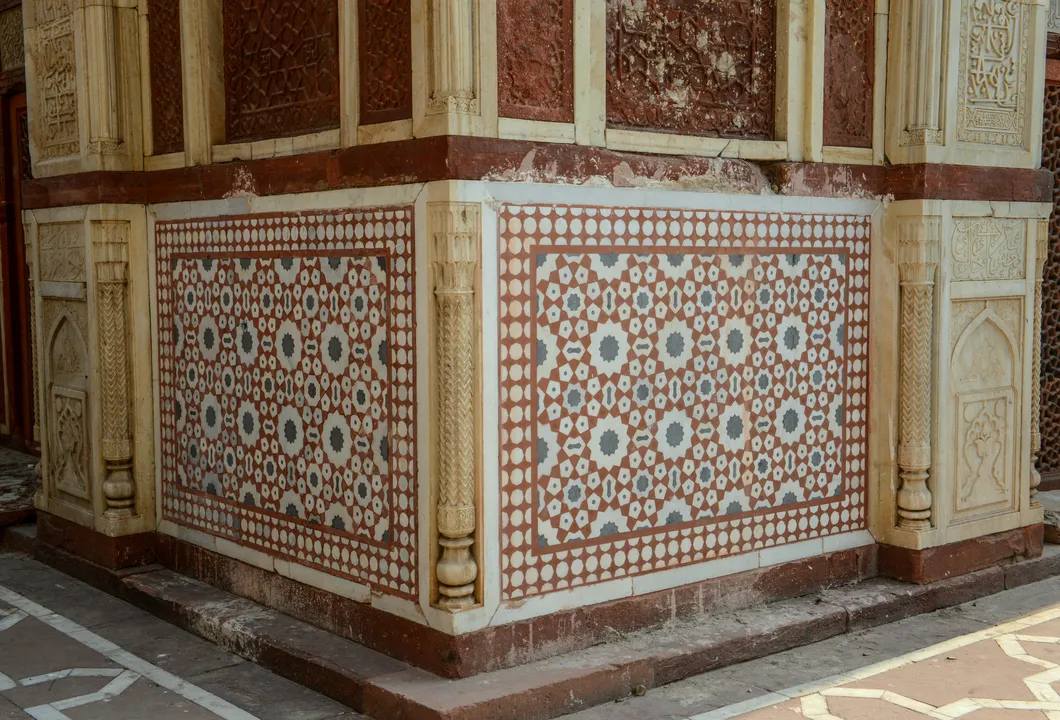
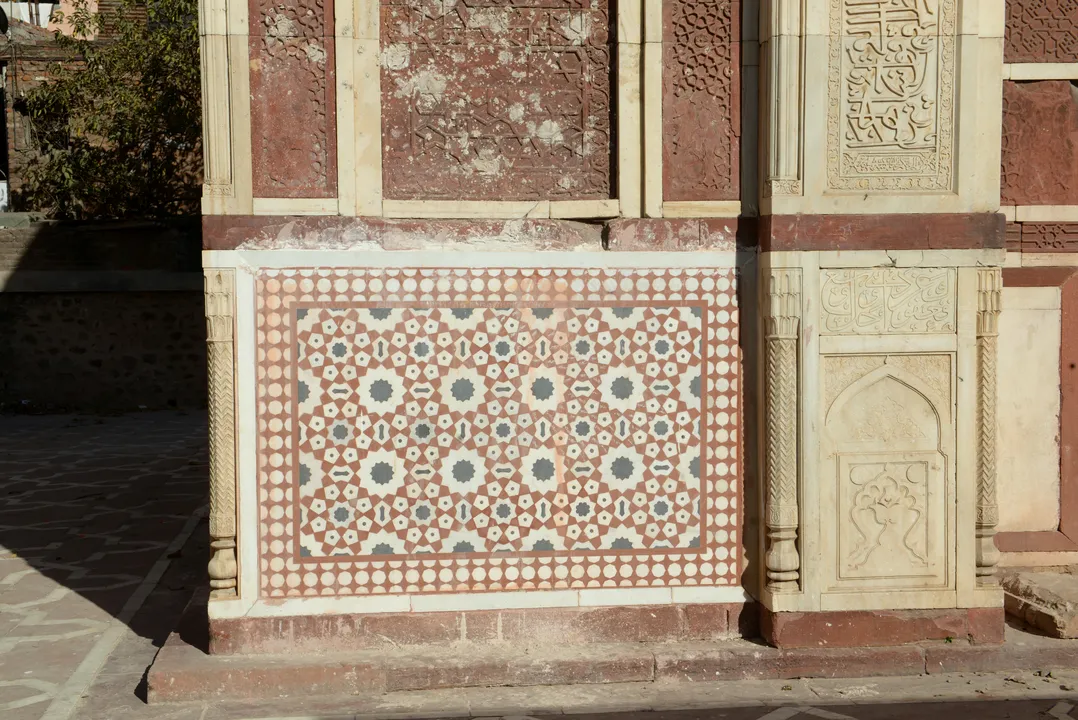
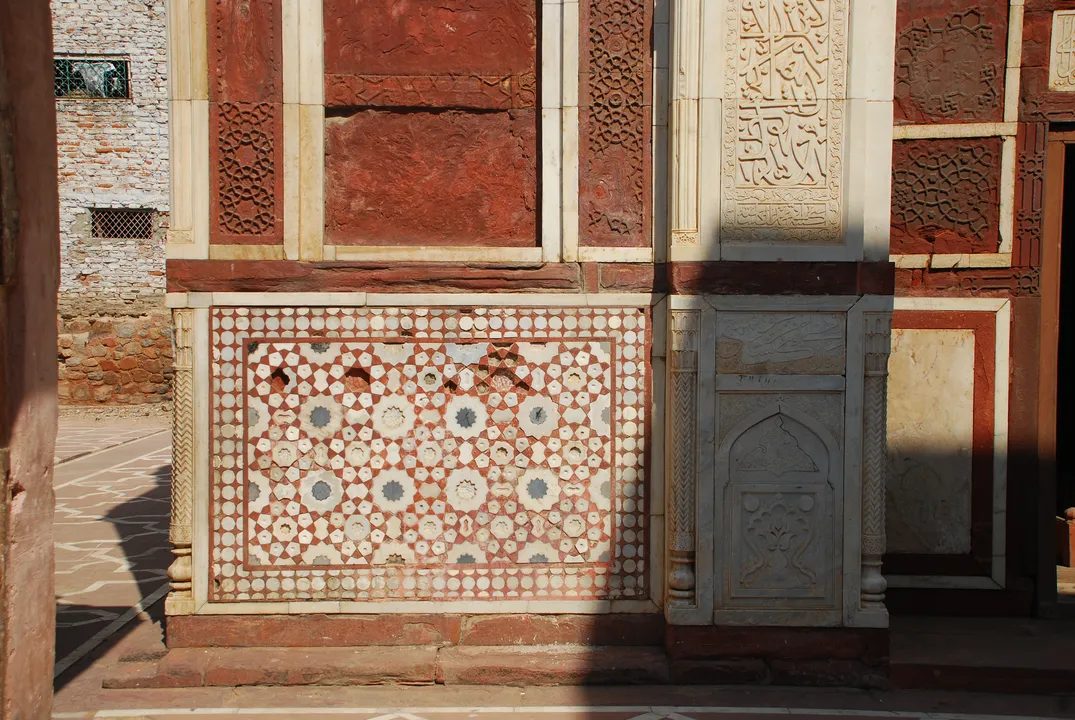
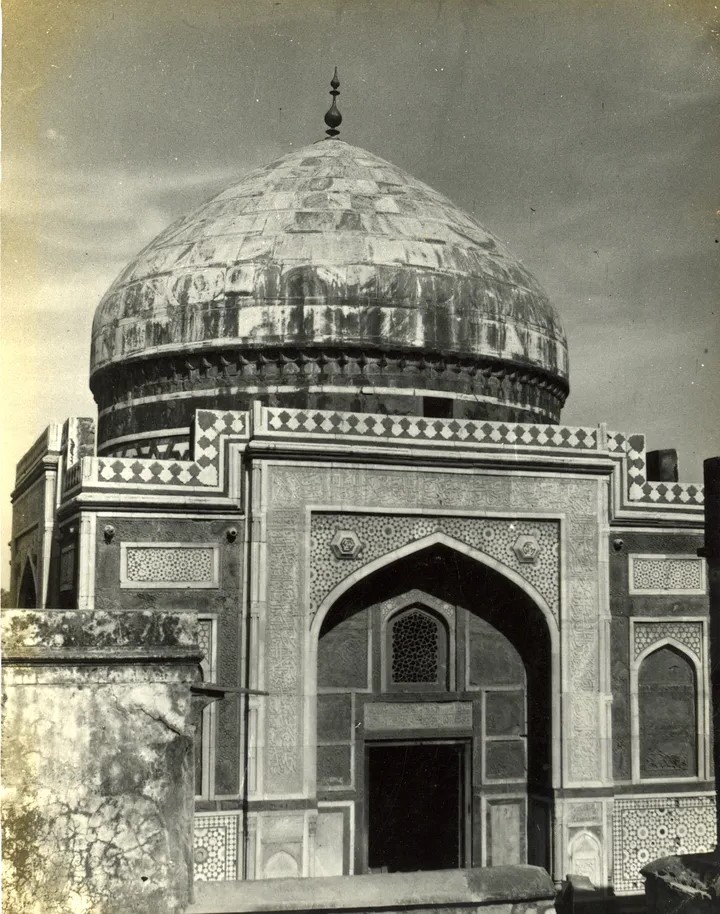
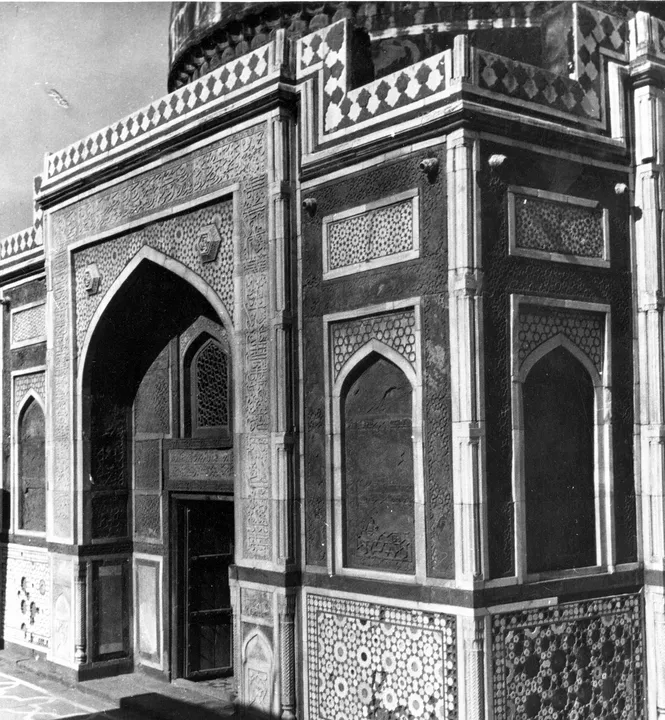
Atgah Khan’s Mausoleum has a red sandstone façade with profuse use of Quranic inscriptions
intricately carved in marble.
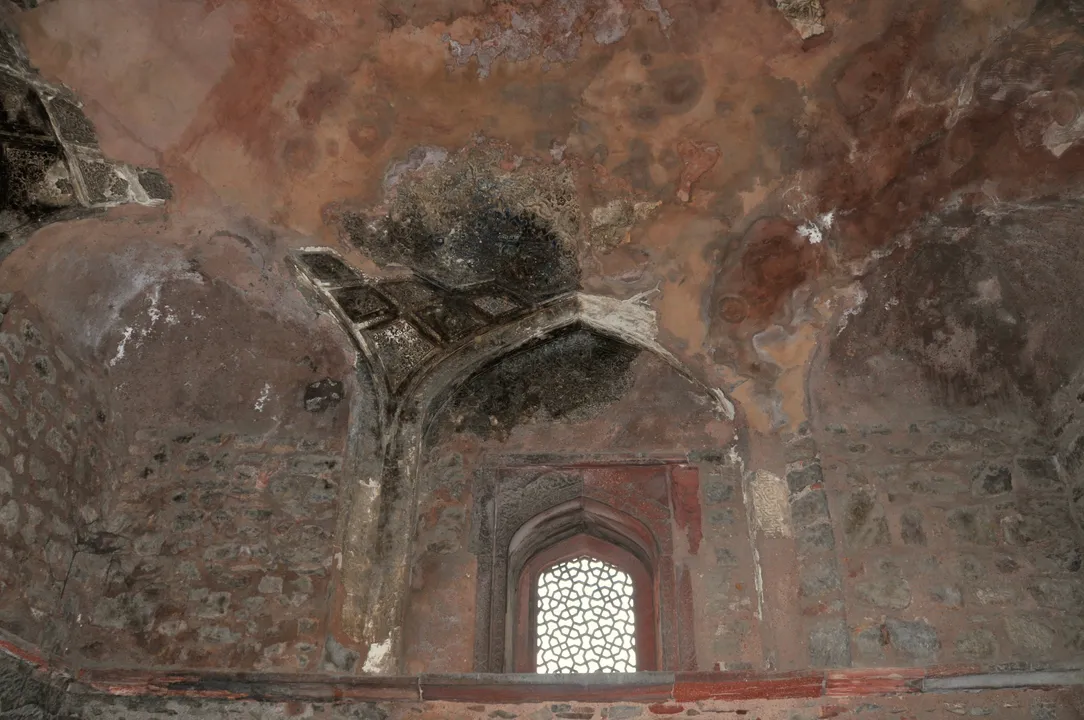
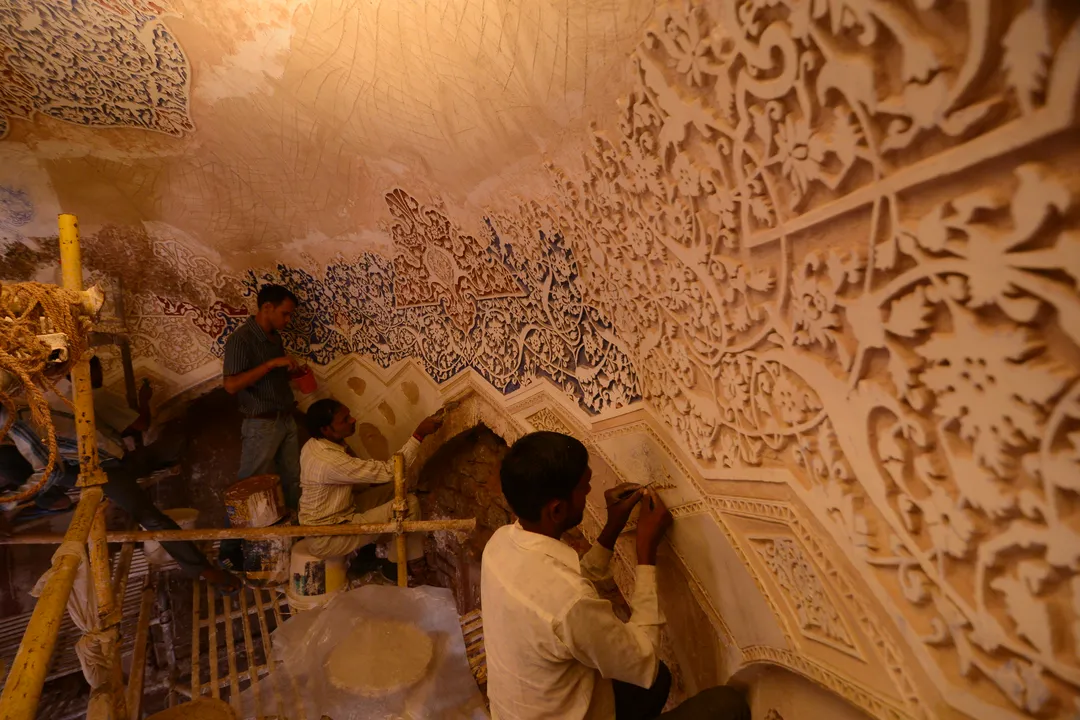
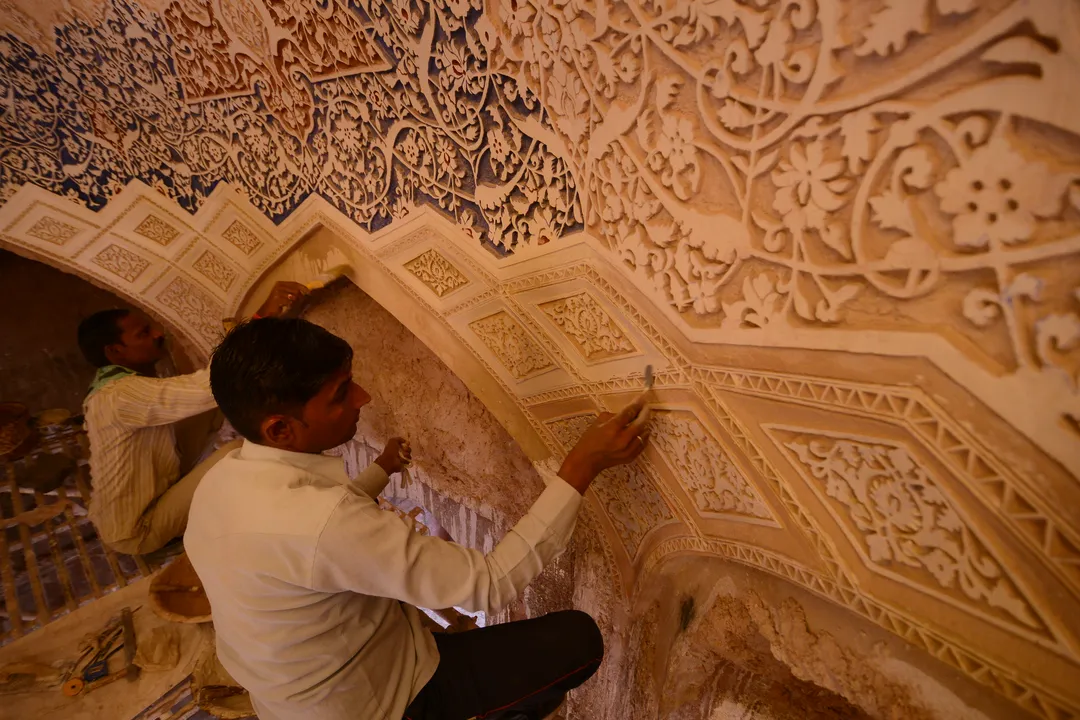
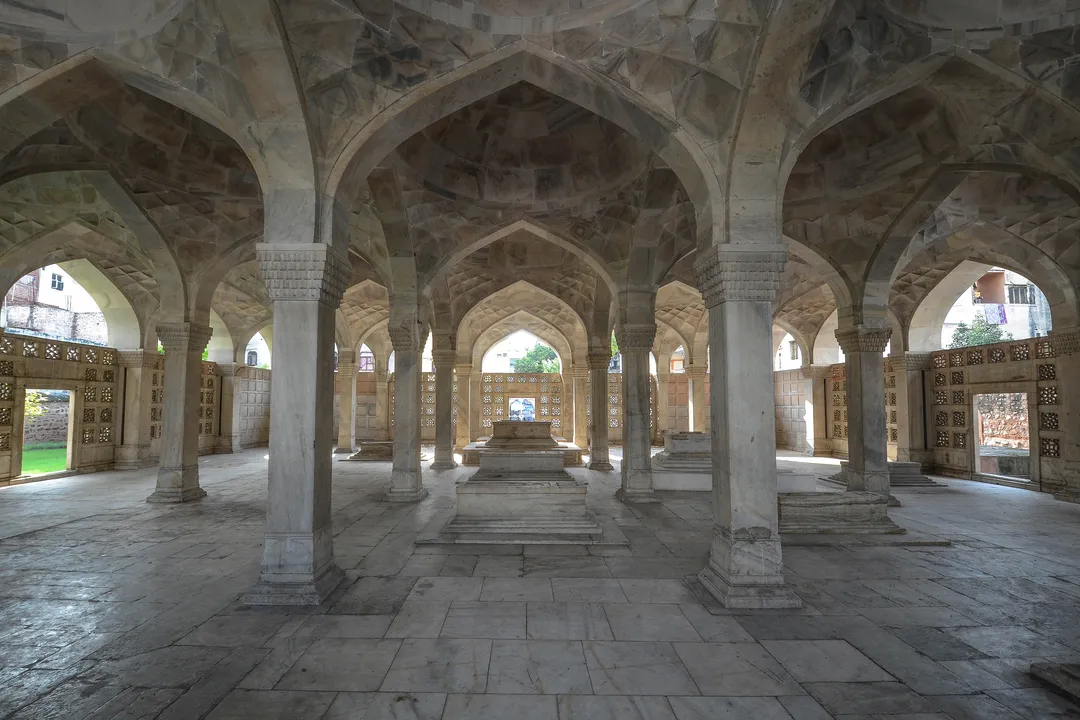
Inside the main hall is the painted incised-plaster ceiling, and the principal gravestones have
delicate floral patterns carved in solid marble.
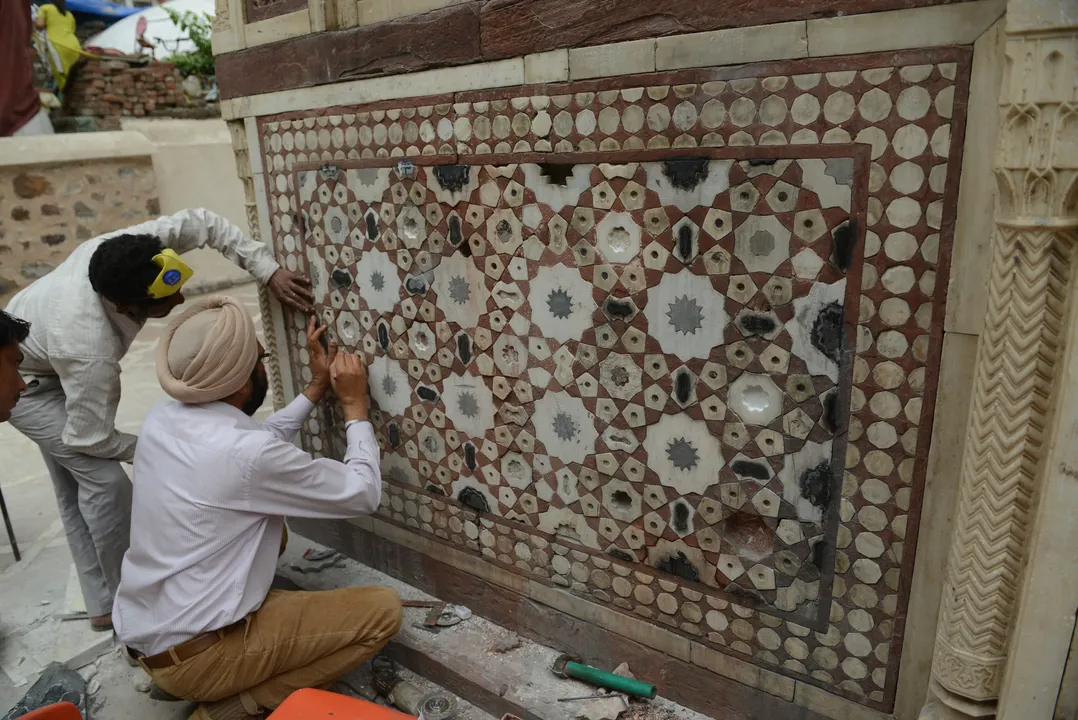
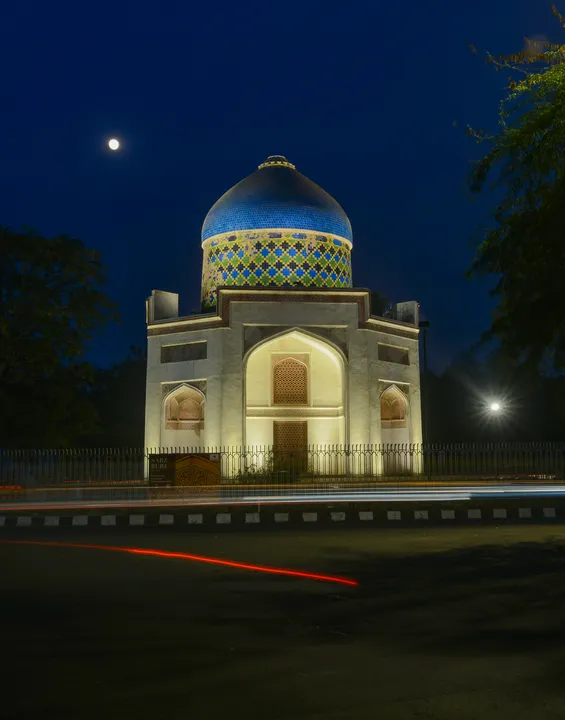
Unique amongst Delhi monuments, the building has glazed tiles inlaid in marble.
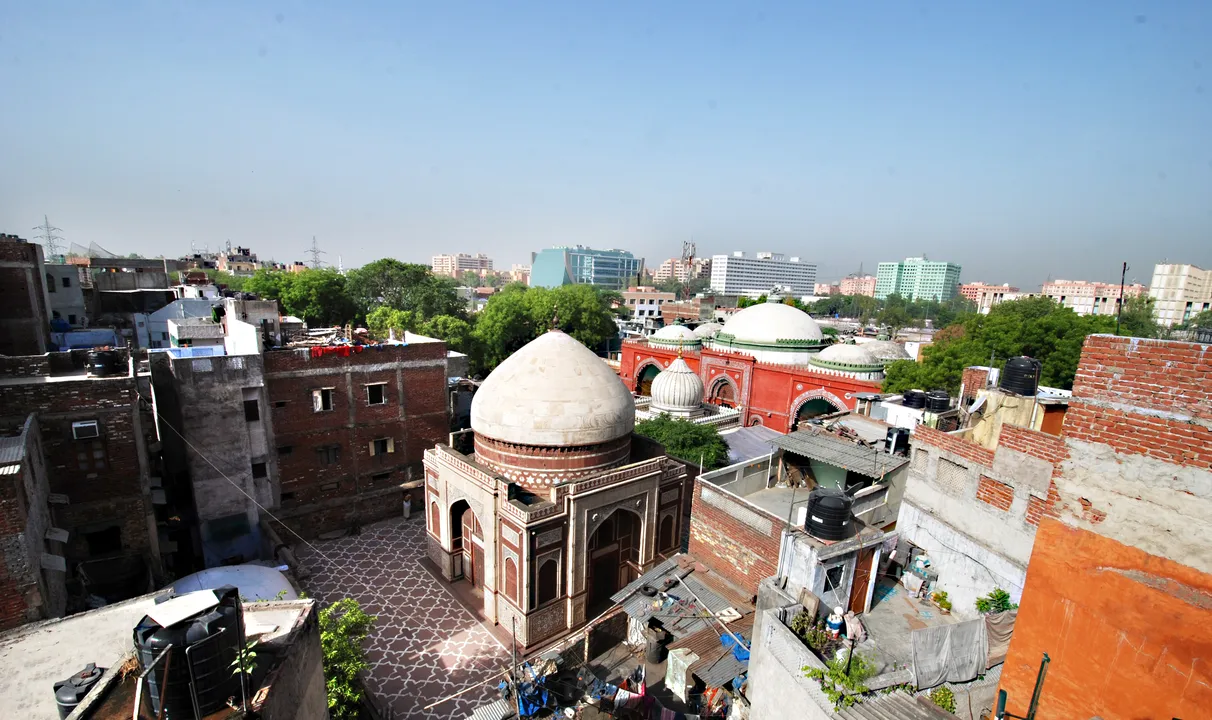
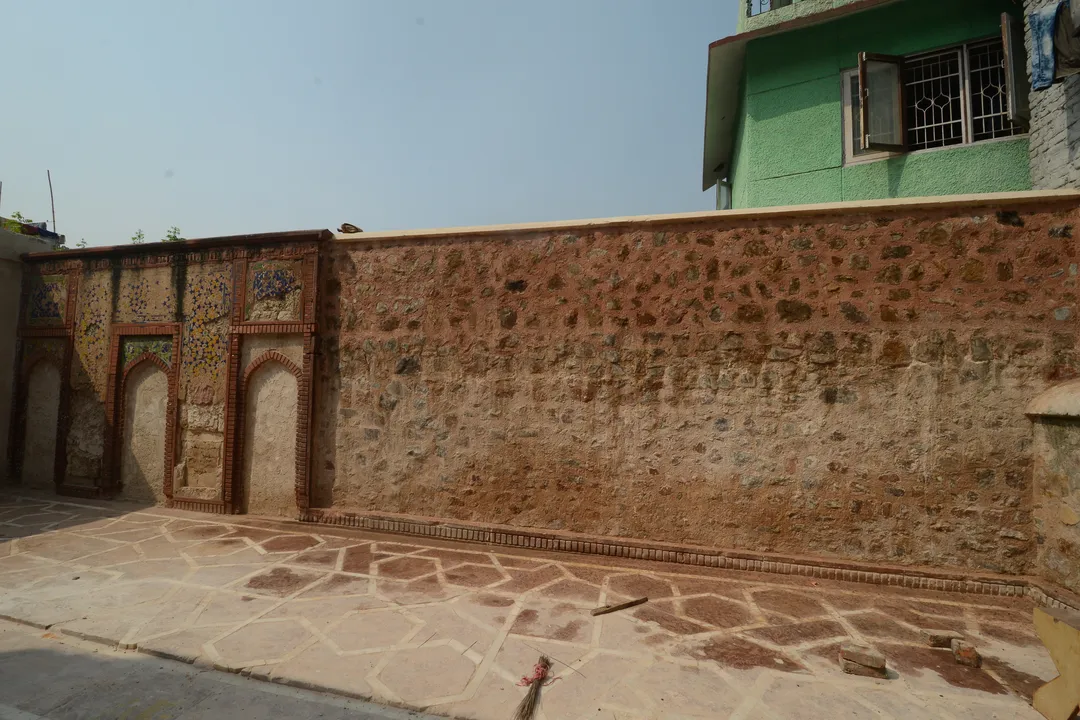
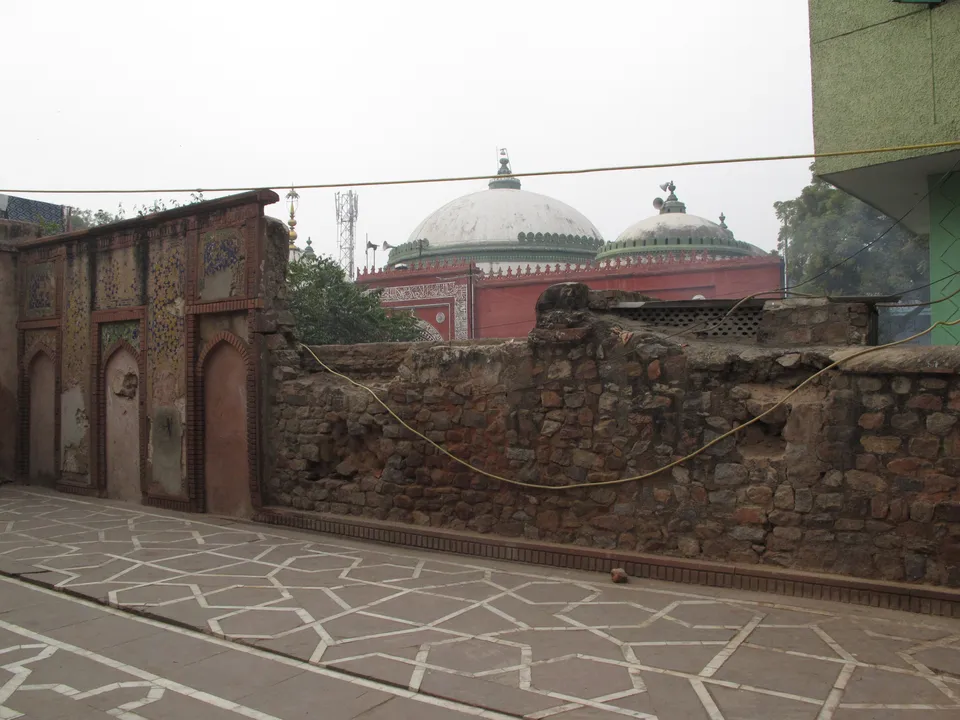
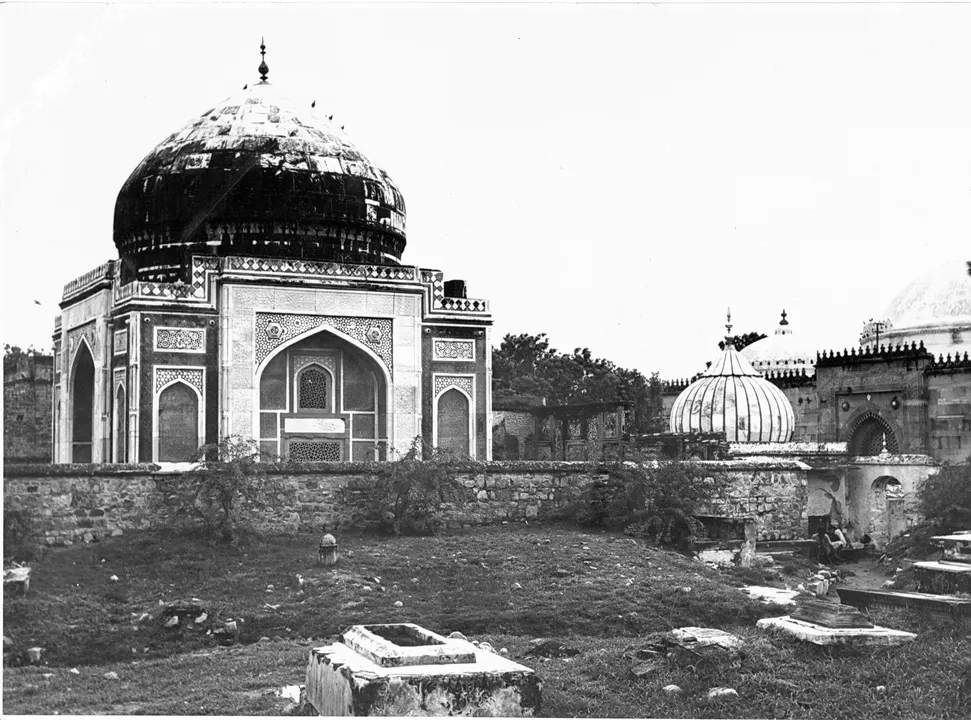
This is one of the few Akbar-era buildings in Delhi, the striking mausoleum stands within a walled
enclosure.
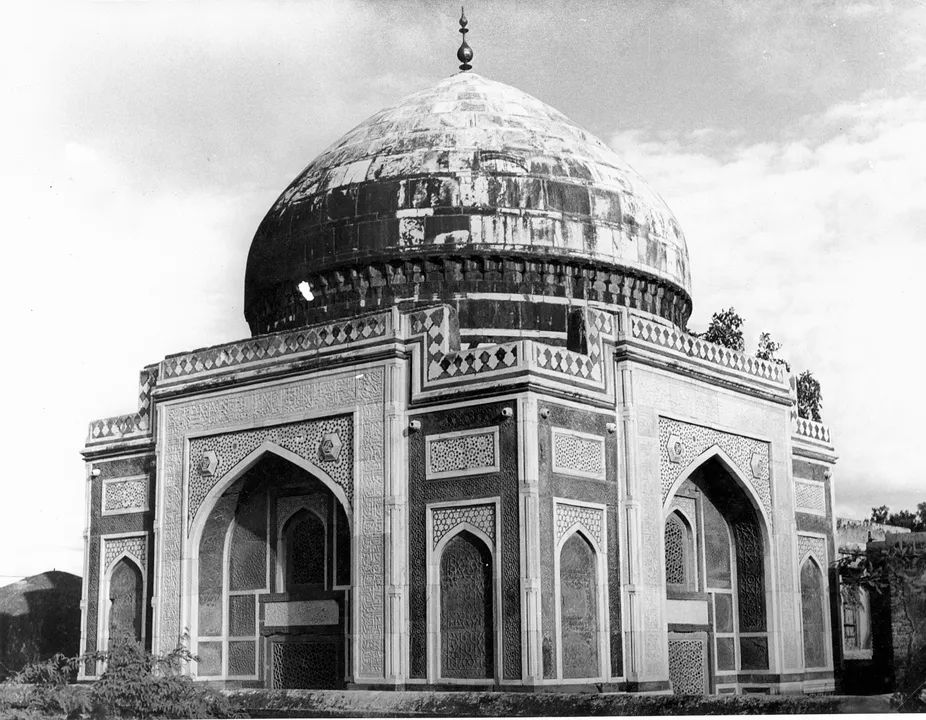
It consists of a 6 sq m chamber roofed by a dome.
On its four sides are deeply recessed arches containing doorways, most of which (with the exception
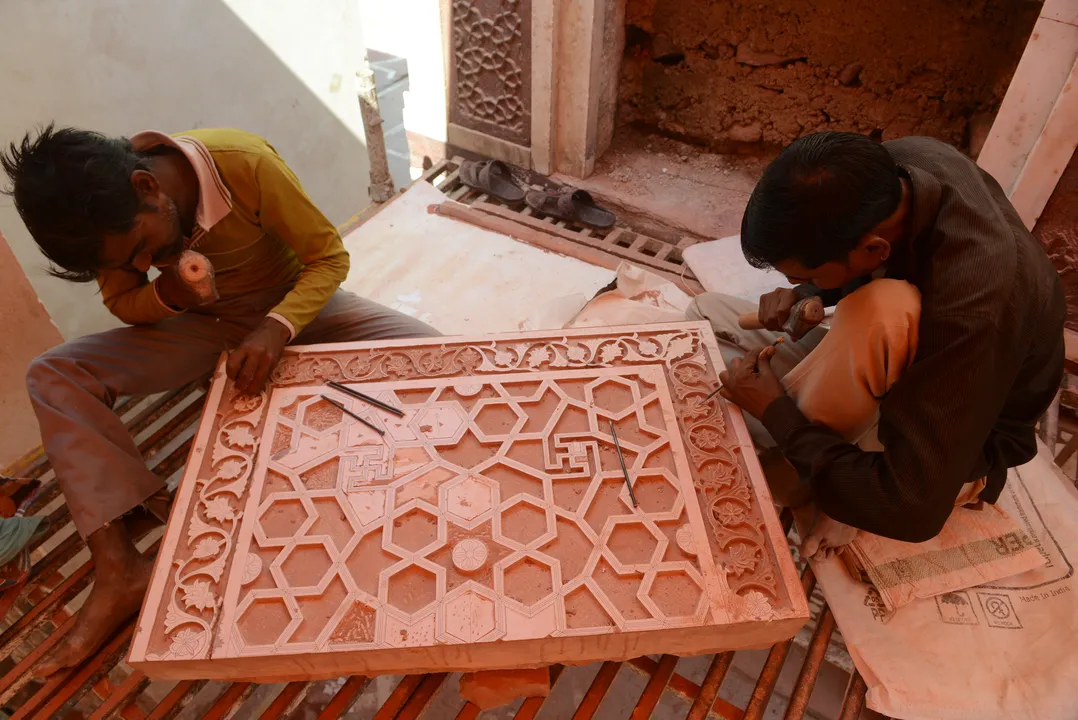
of that towards the south, which forms entrance to the building) are closed with lattice stone
screens.
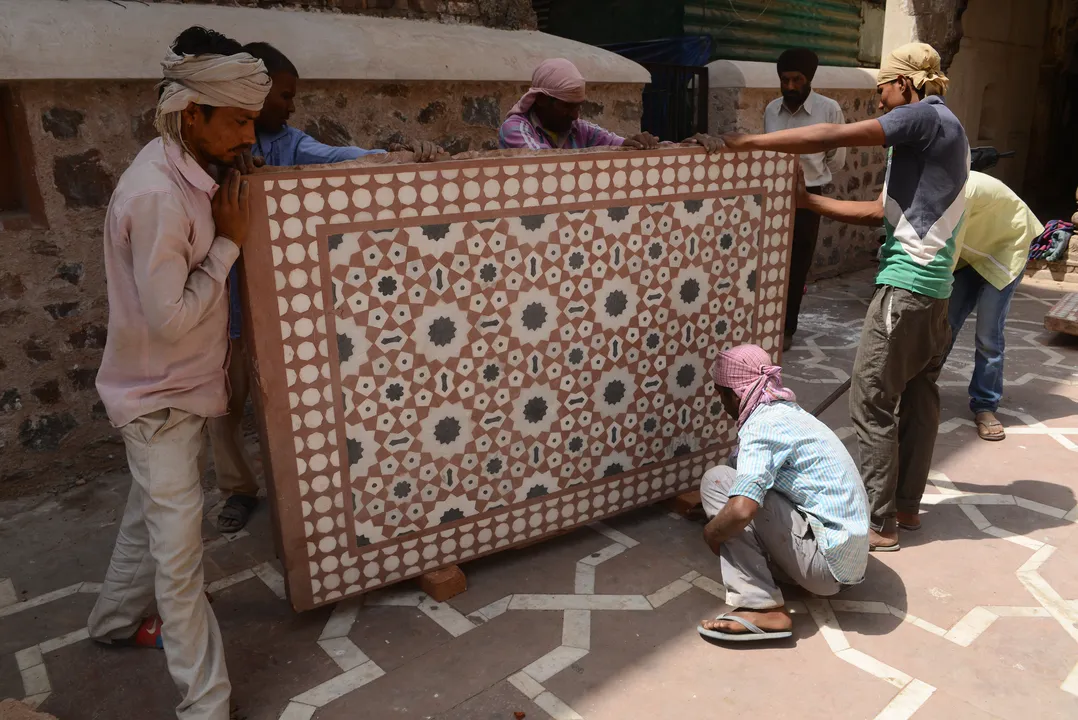
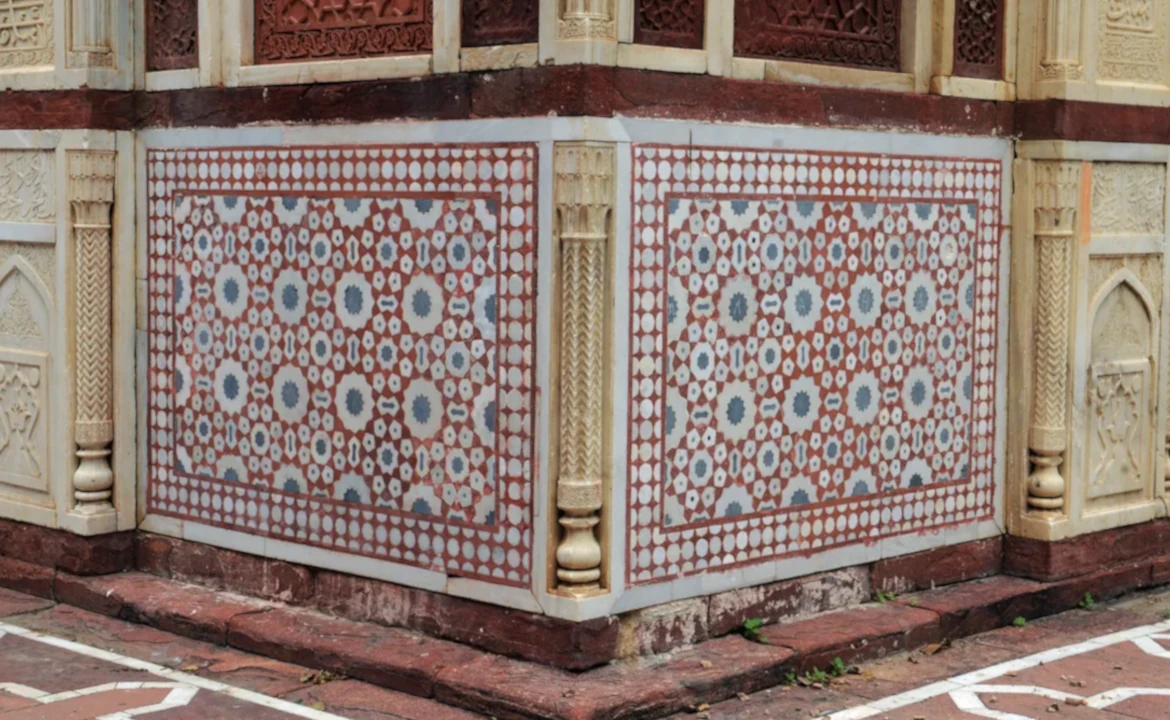
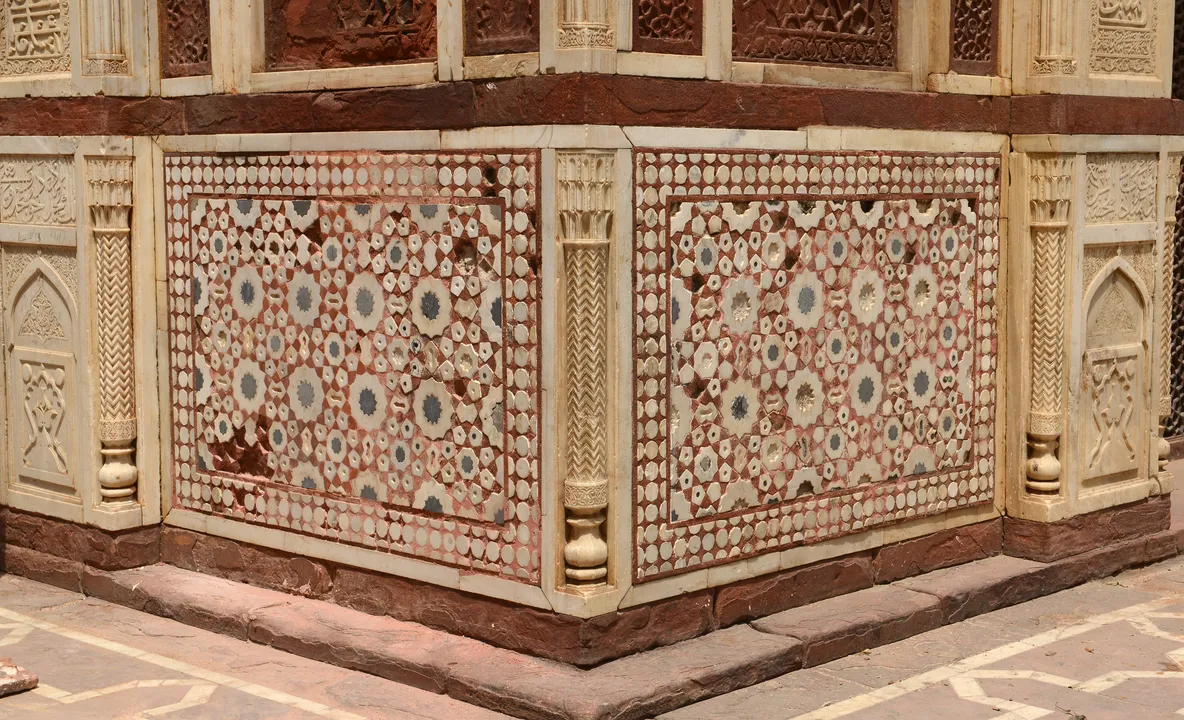
The building as well as the enclosure walls are made of red stone inlaid with marble and coloured
tiles.
The floor of the enclosure has marble strips inlaid in sandstone.
Inside the mausoleum, there are three marble graves containing interesting carving.
The grave in the centre is that of Atgah Khan; that on visitor's right is of his wife Ji Ji Angah,
but the grave on his left has not been identified.
The enclosure contains two dalans or vaulted halls of late Mughal period which were used as khanqahs
or convents.
There are several other graves in the enclosure, but they are of no importance.
Square in plan, the mausoleum is a combination of red sandstone and white marble, with geometric
pattern red sandstone inlay panels on all the four façades and marble panels with handmade tile
inlay work in the spandrels.
The interiors – once highly decorated with red sandstone jaalis and incised plasterwork motifs and
calligraphic inscriptions from the holy Quran – have mostly been stripped of this original work and
in the early 2000s, layers of cement-surkhi plaster was added to much of the red-blue ceiling, which
had ornamental incised plaster work.
.webp)
.webp)
.webp)
.webp)