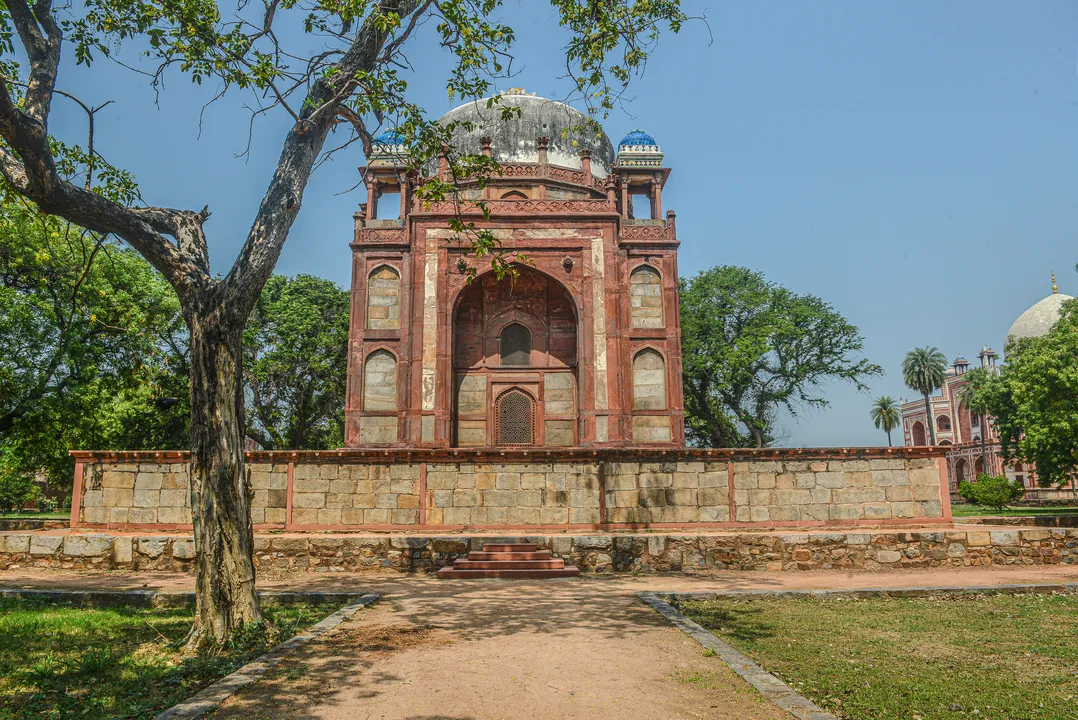
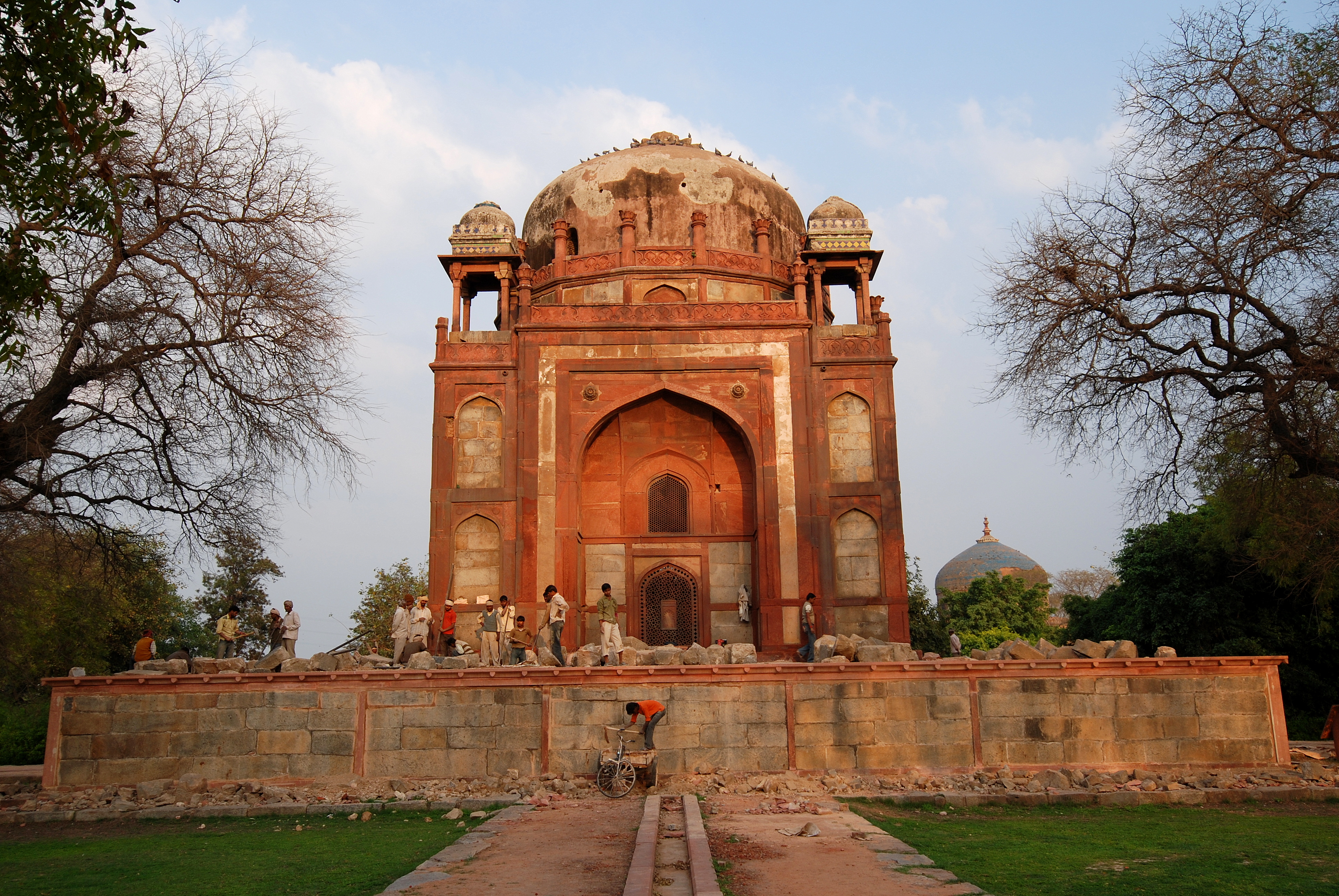
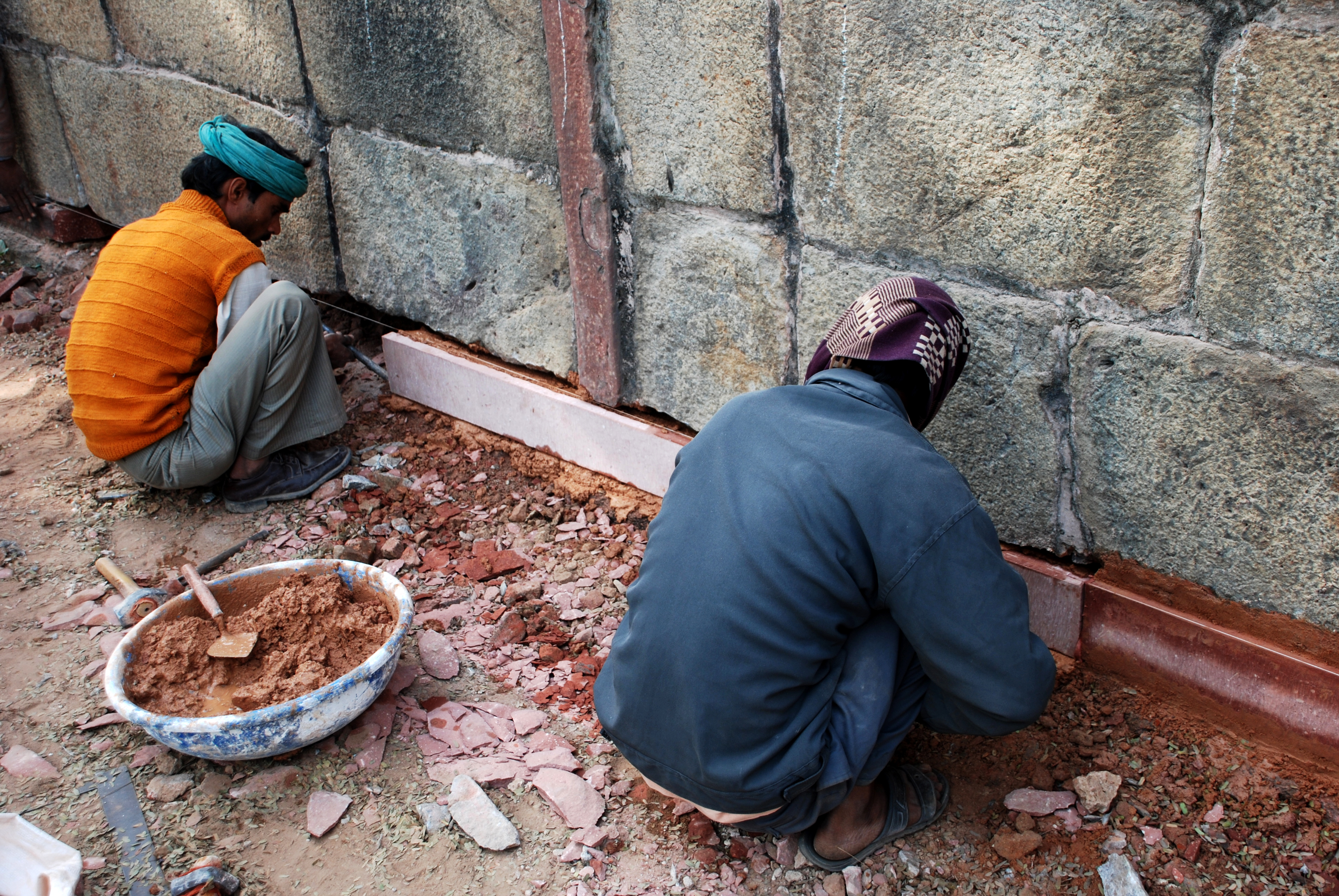
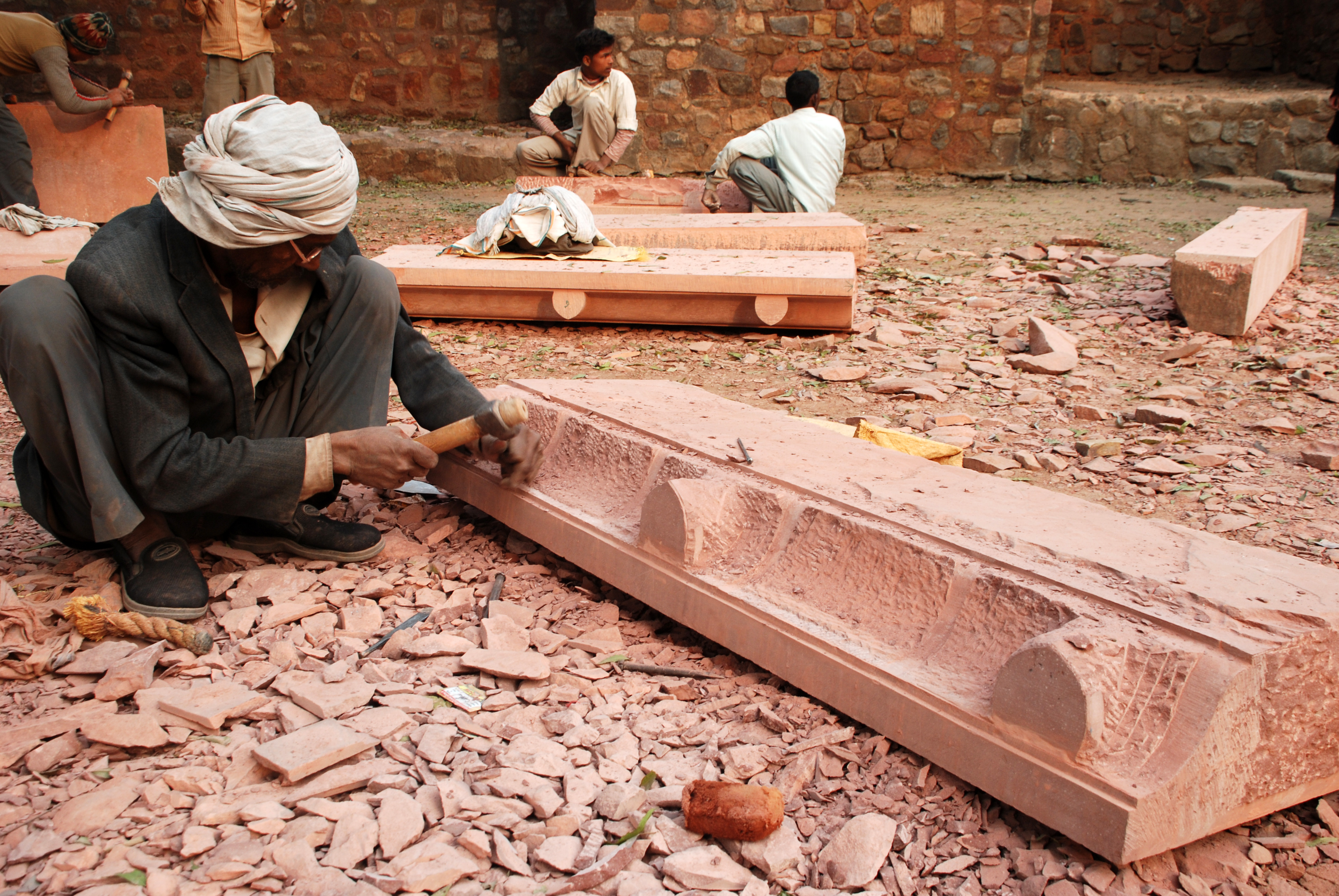
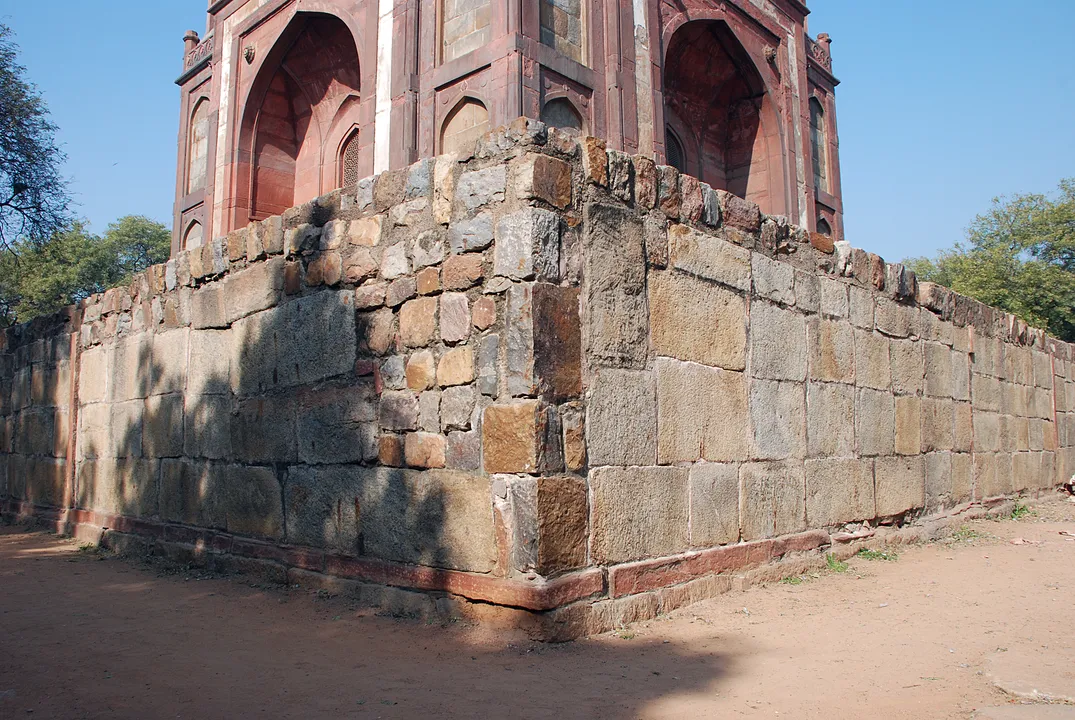
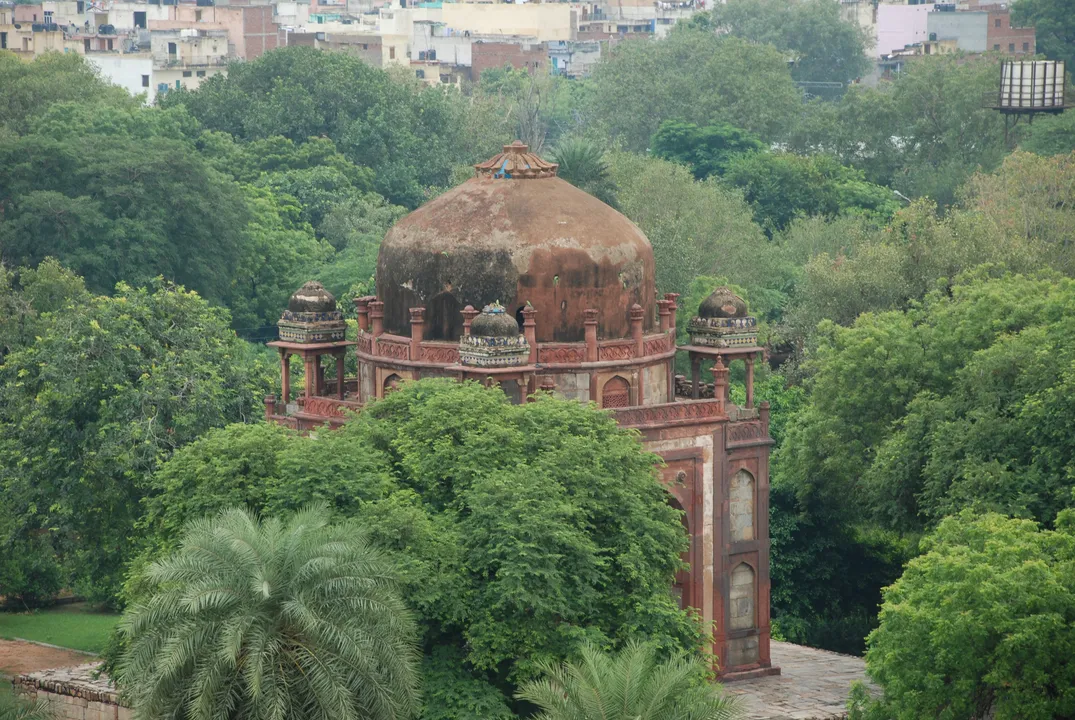
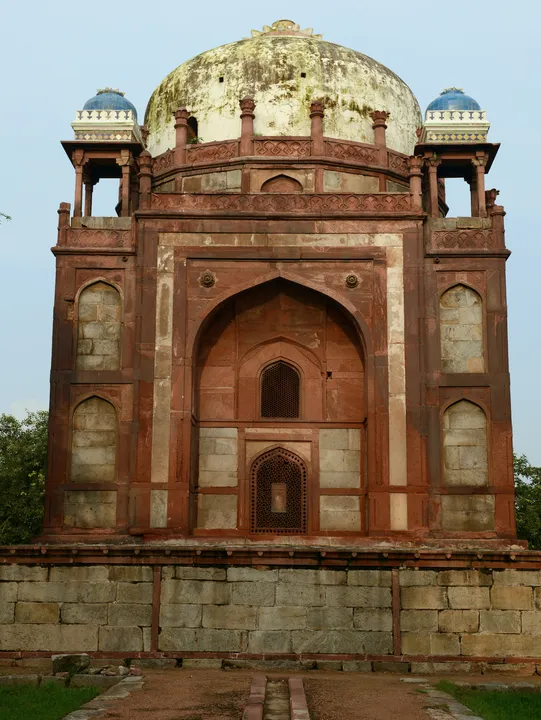
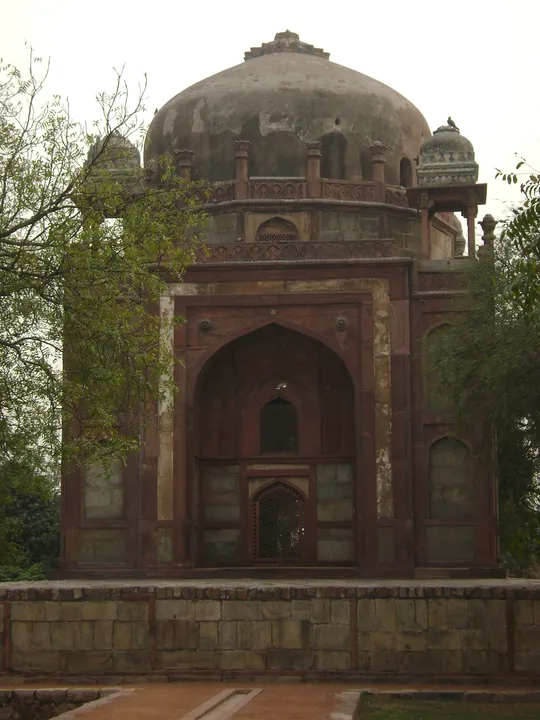
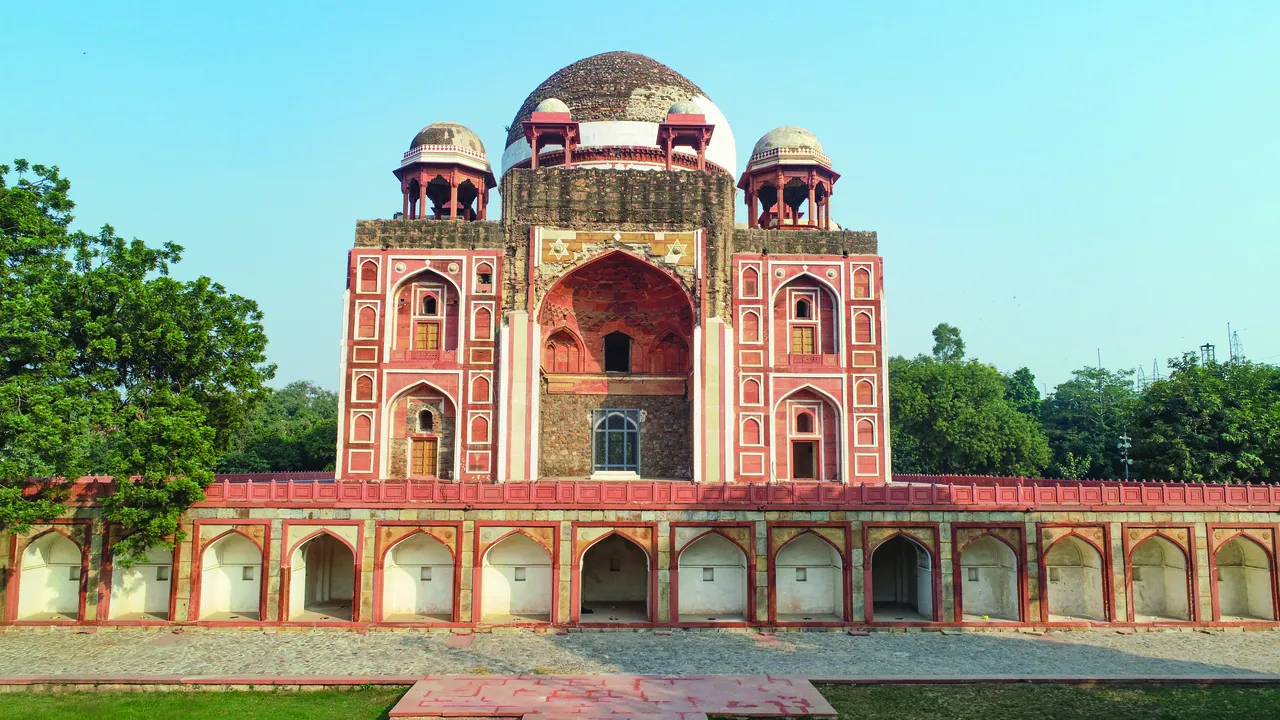
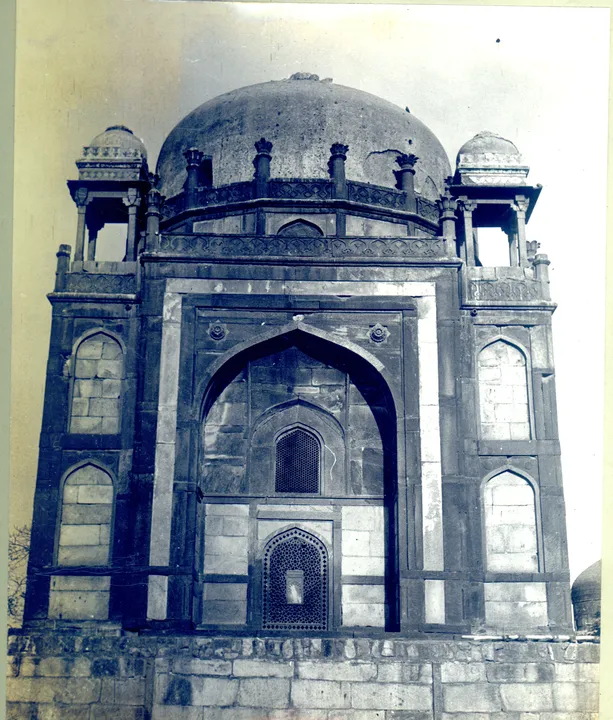
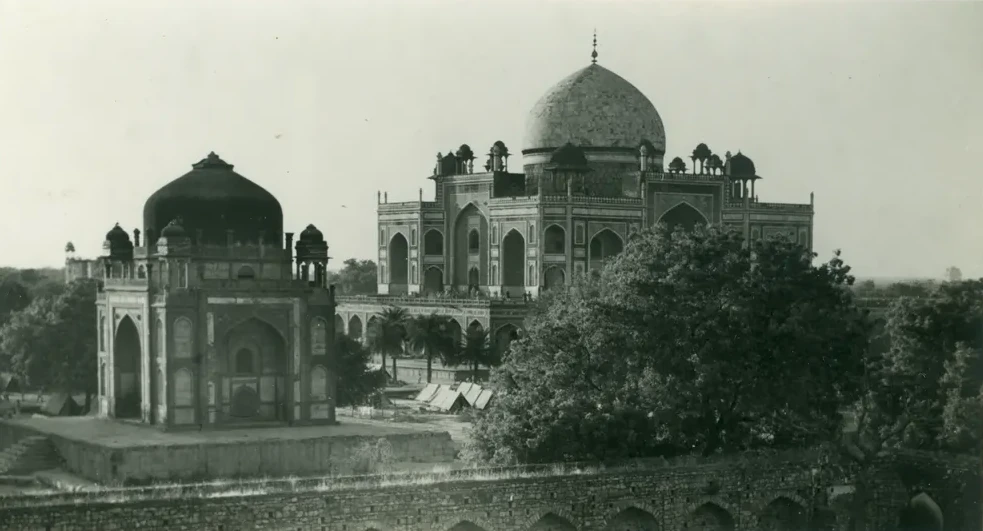
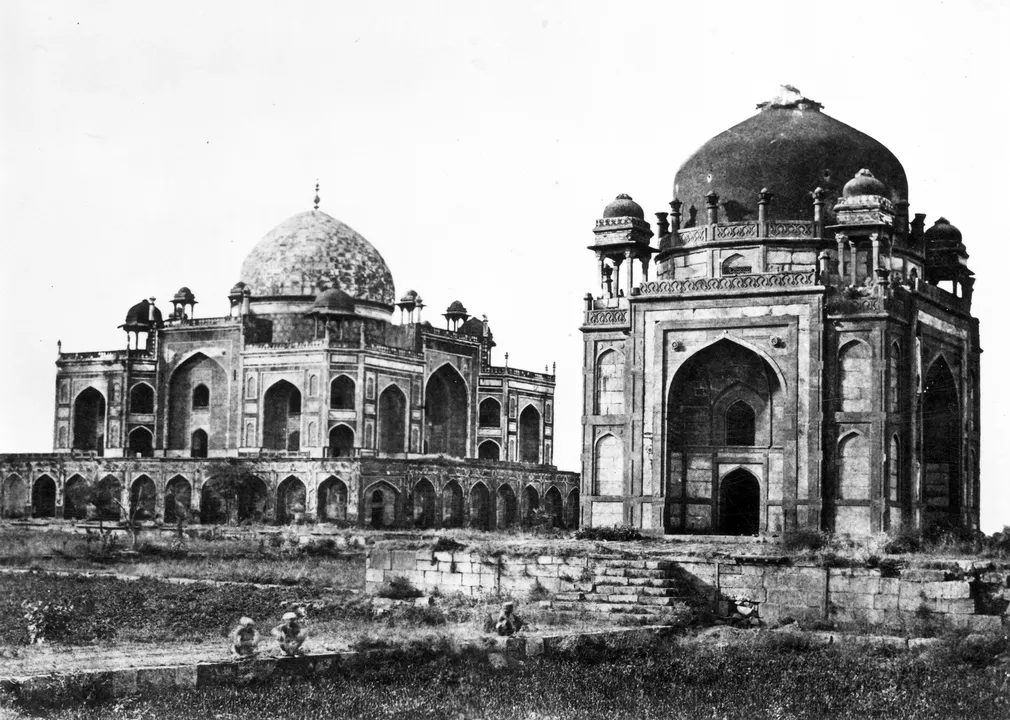
Archival photographs revealed that the structure once had a decorative sandstone edging on the
plinth.
During earlier repairs, this had been replaced with rubble masonry.
On the basis of the images, the sandstone edging was restored to the plinth.
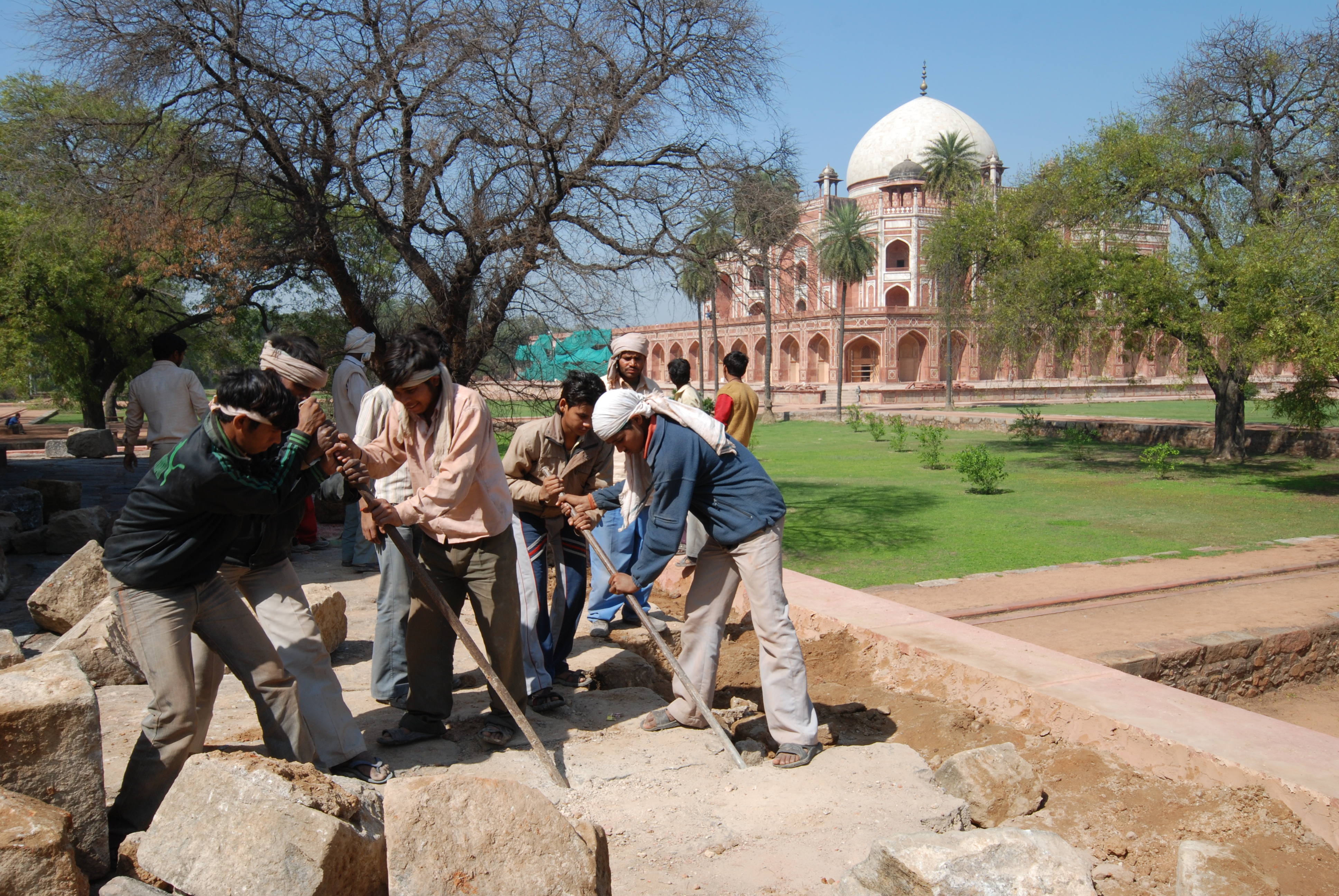
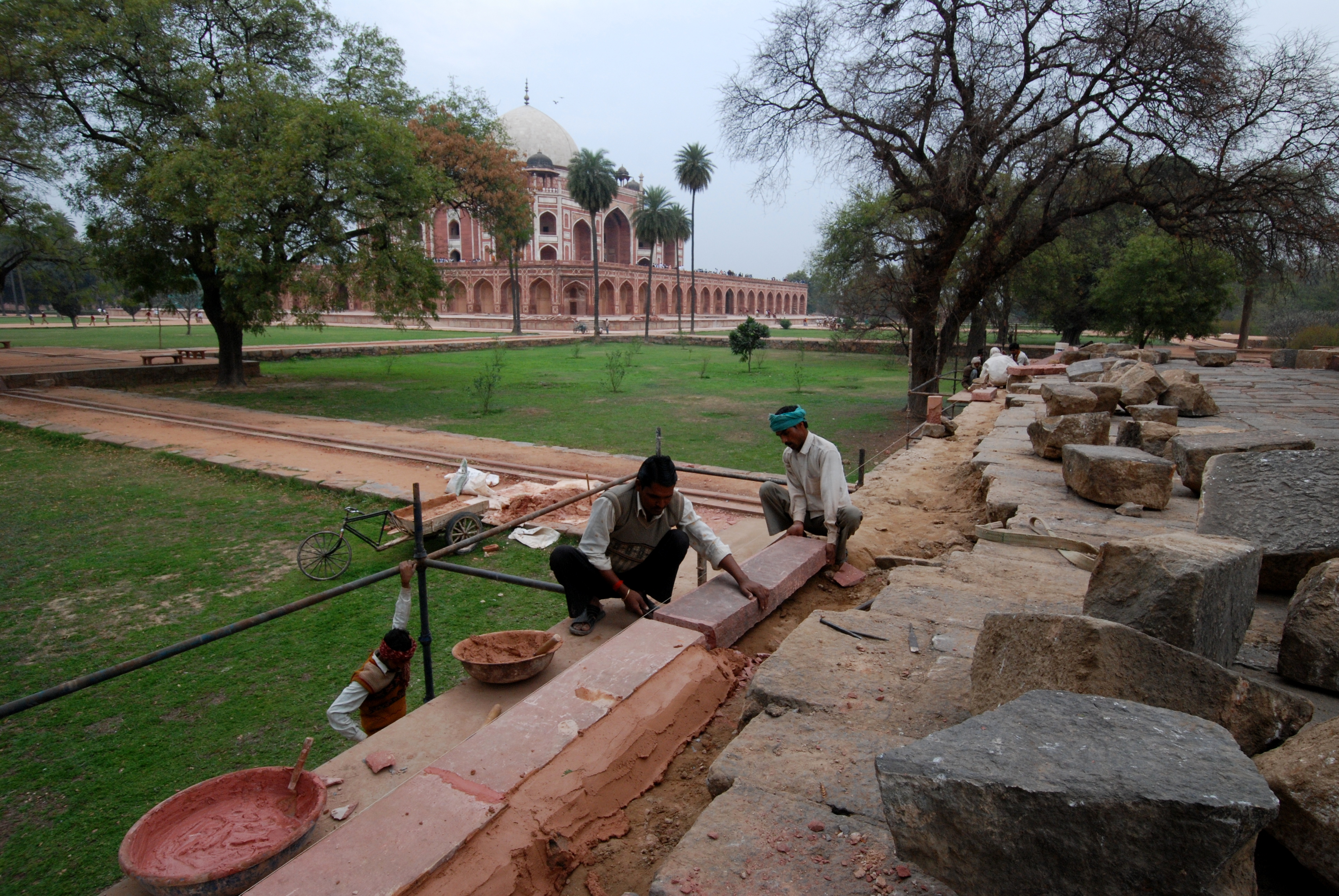
The plinth surface had settled unequally and needed to be repaired by lifting the large blocks of
stone and setting them on a masonry base to an adequate slope.
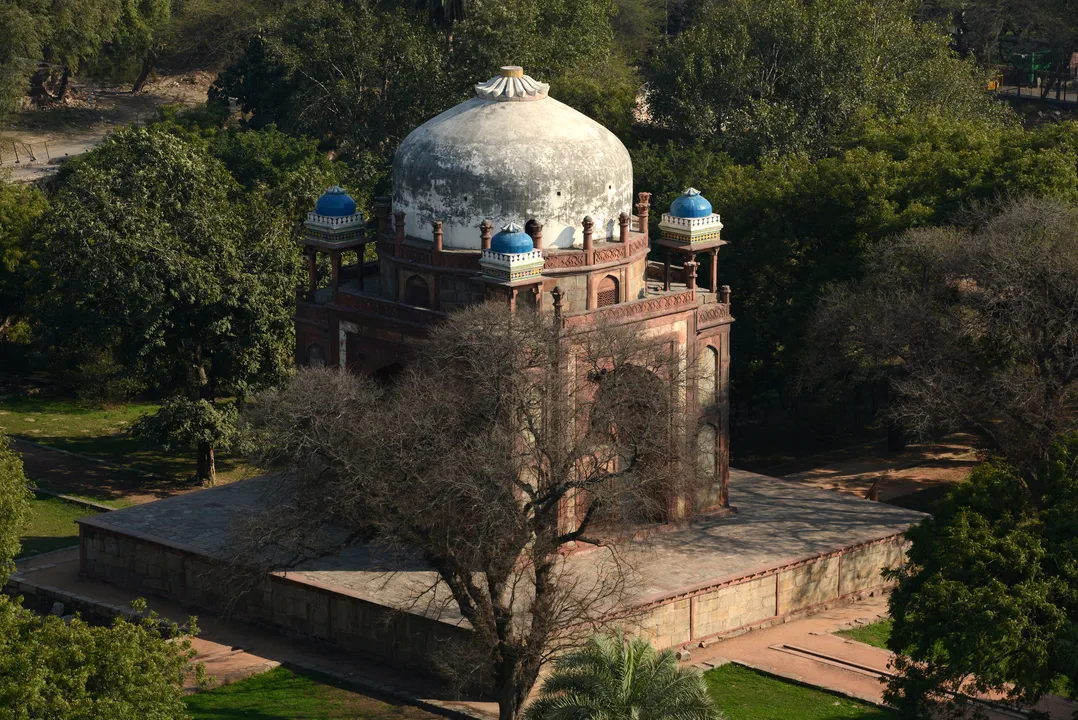
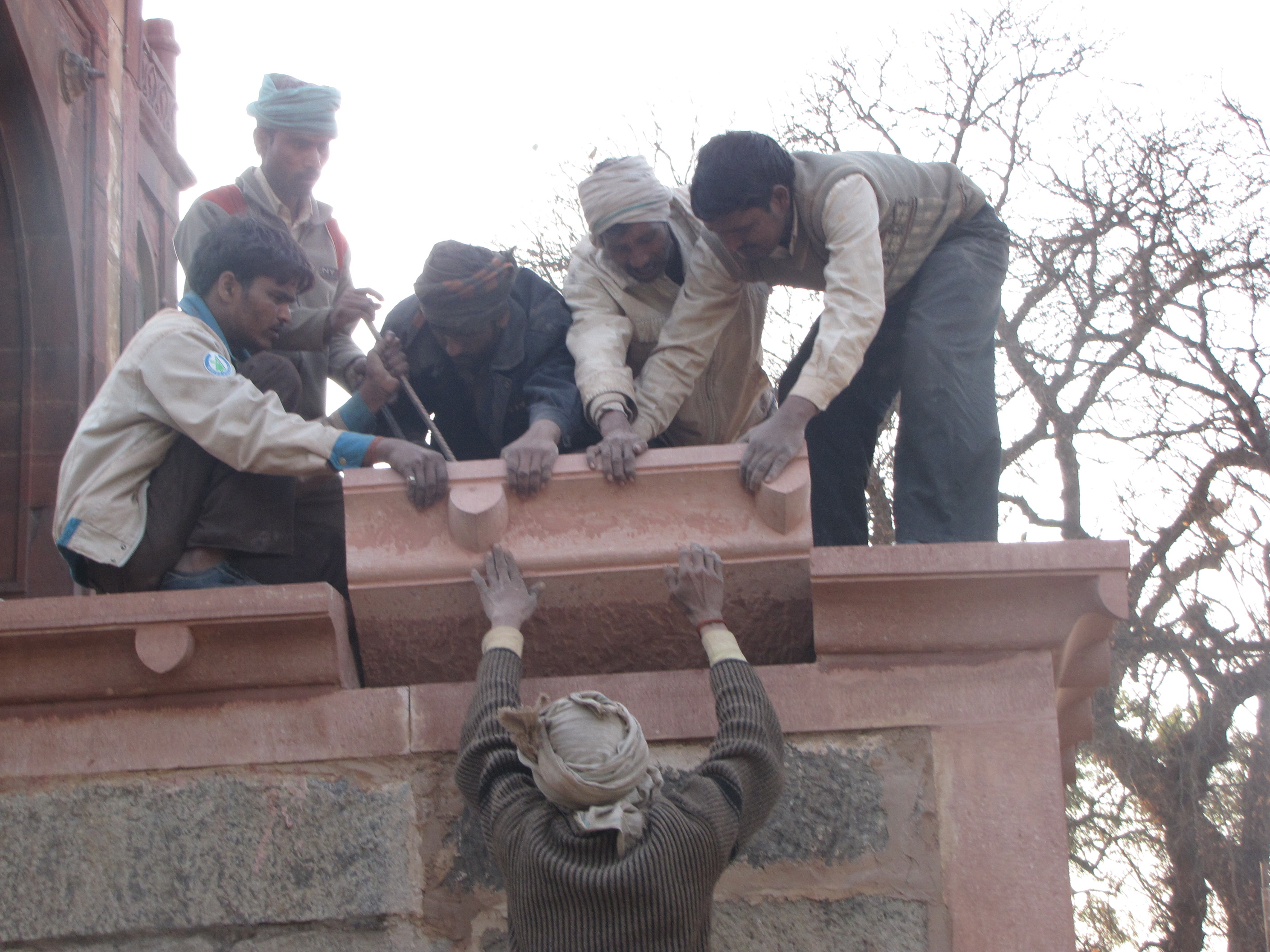
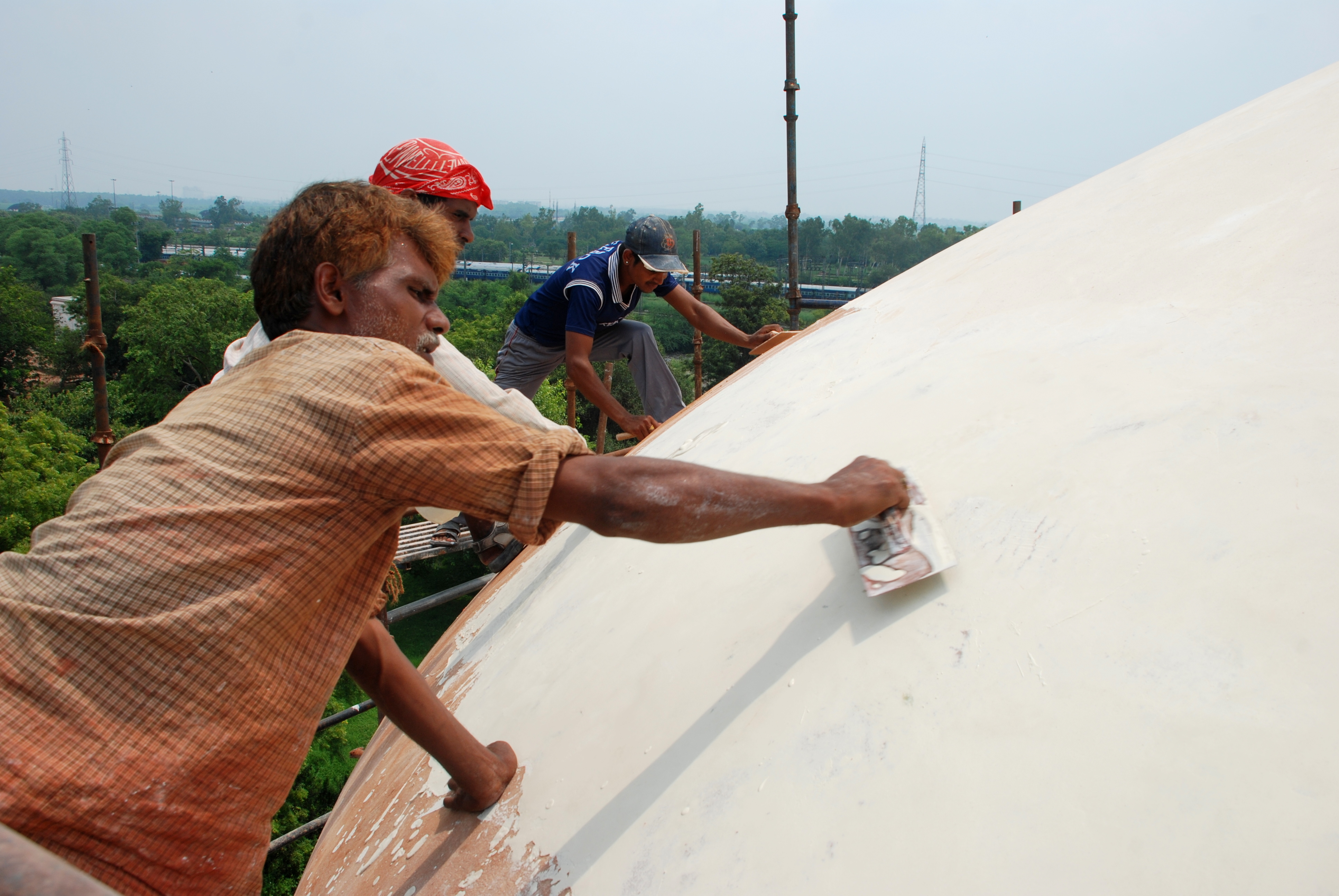
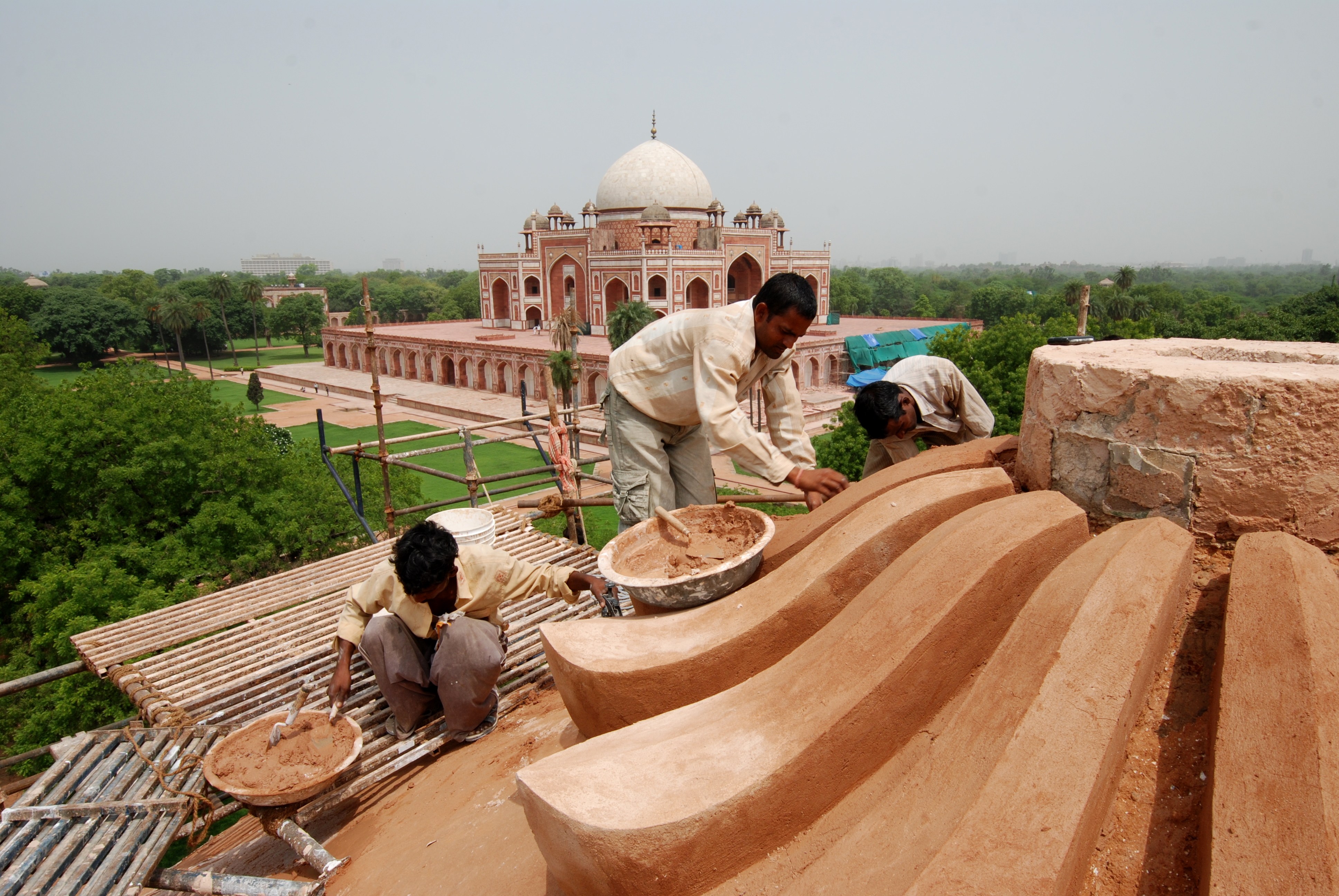
The roof of the structure is not accessible via staircases and was poorly preserved.
Layers of cement concrete were removed and the roof made water-tight using traditional lime-based
repairs.
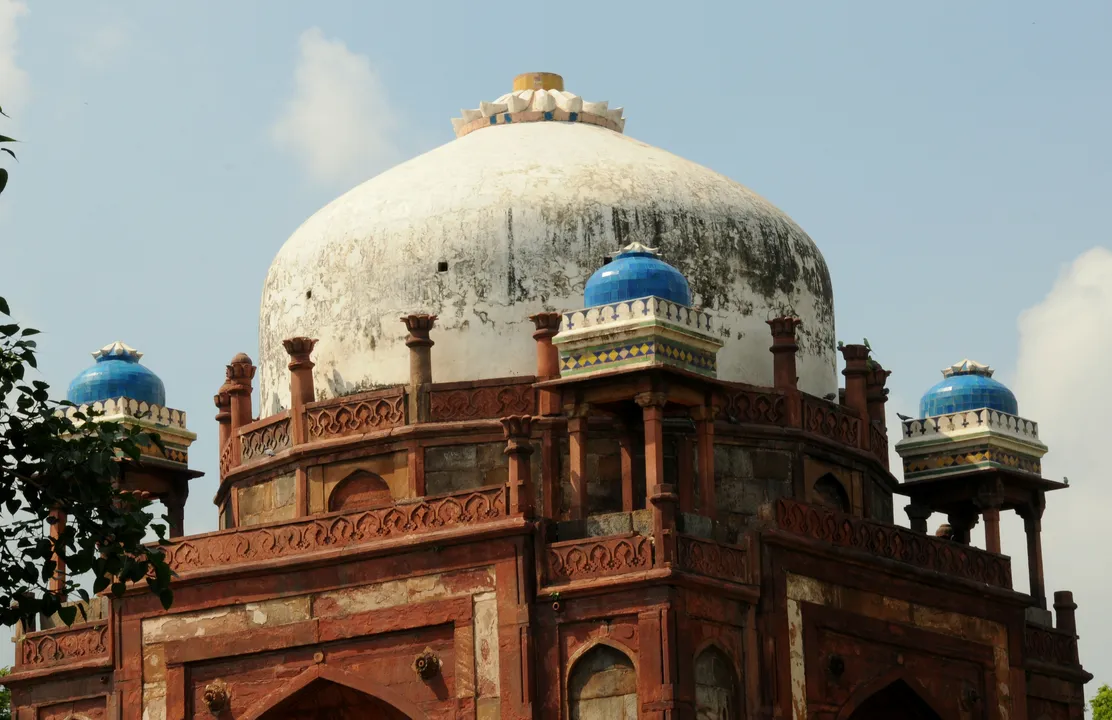
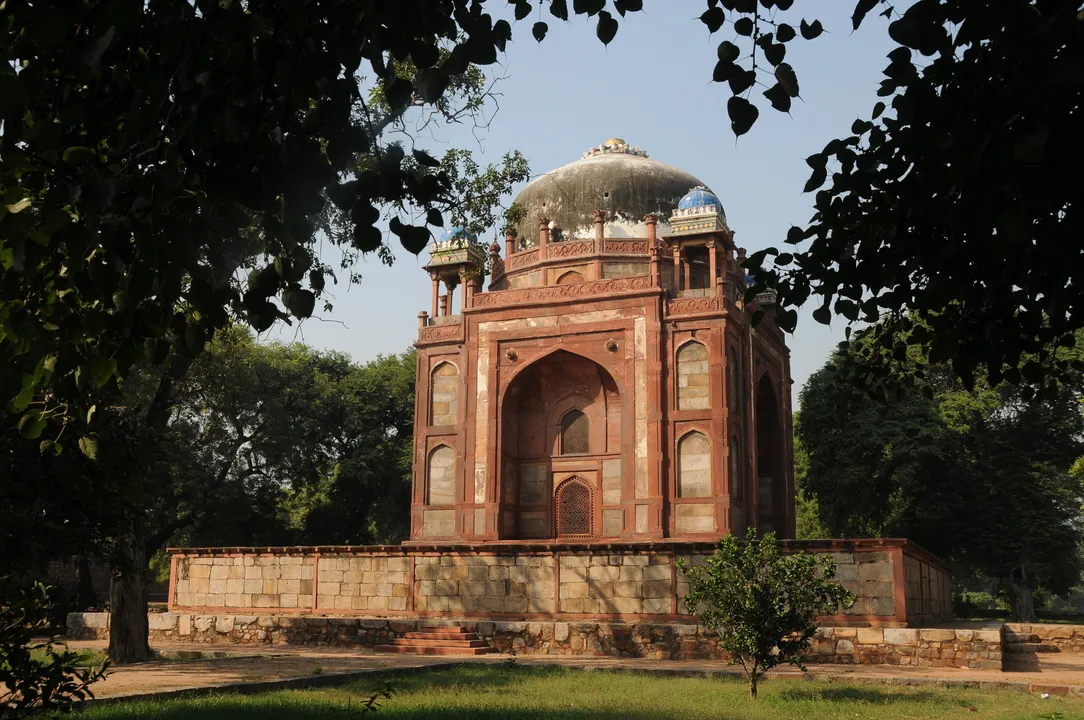
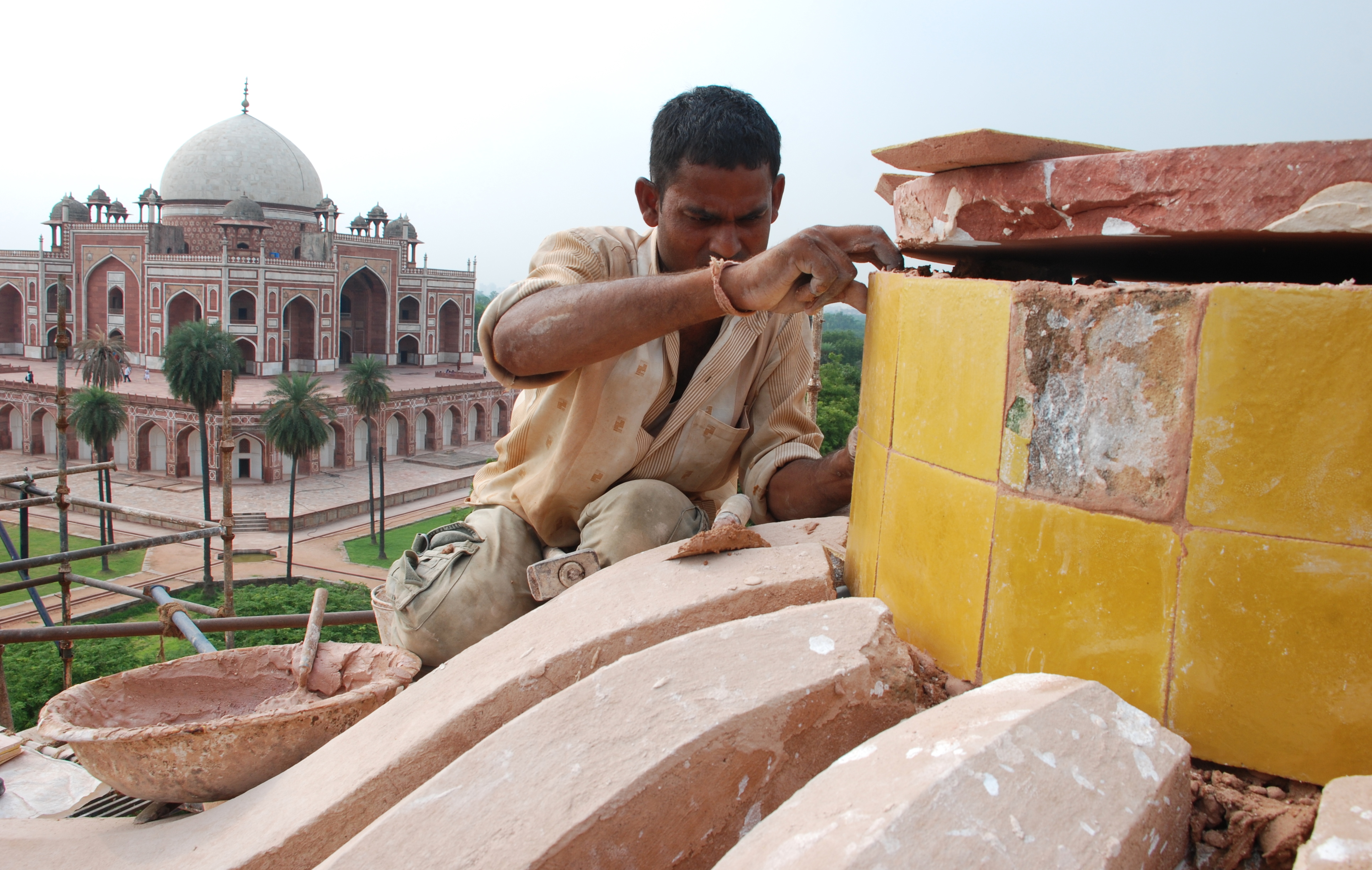
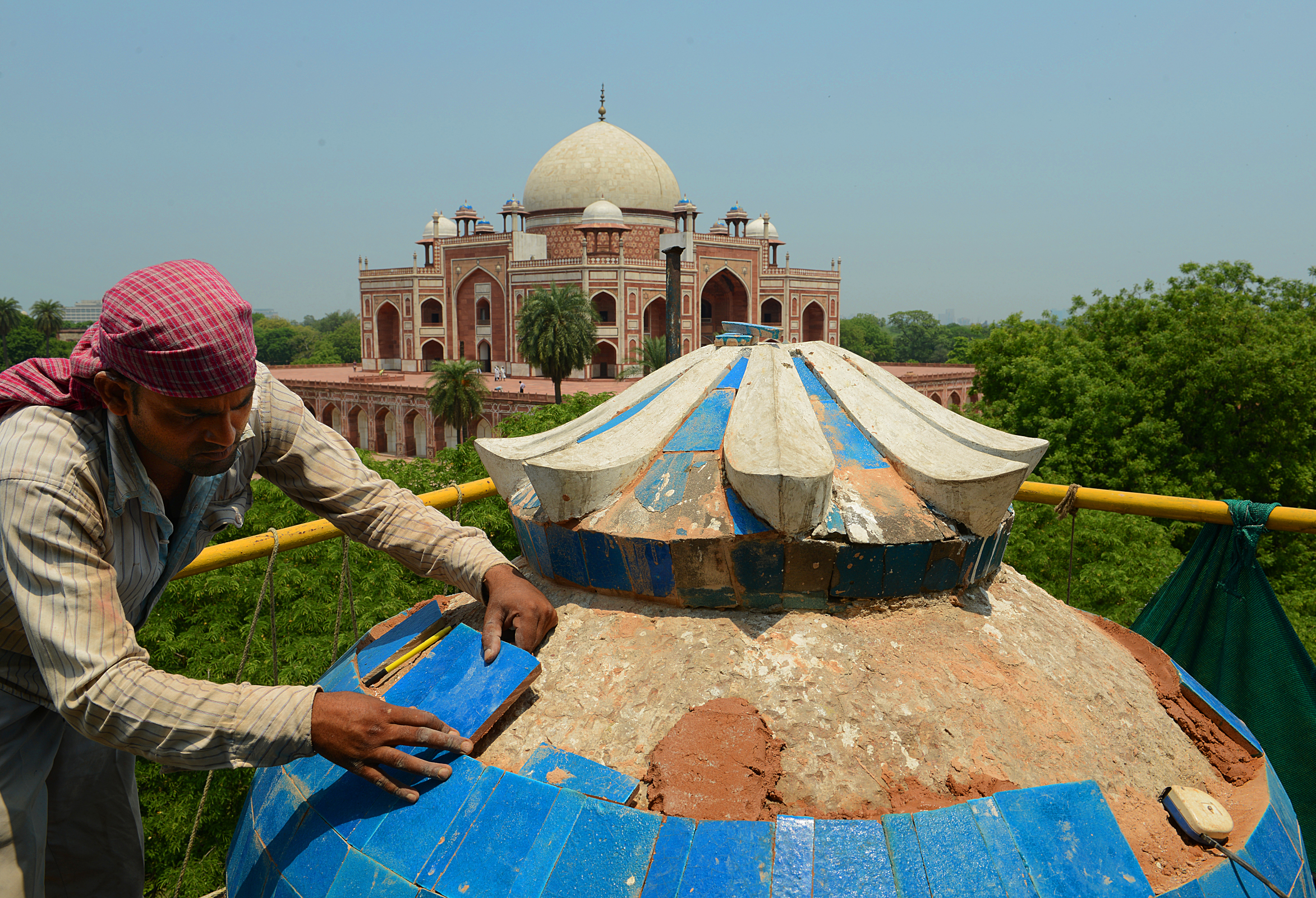
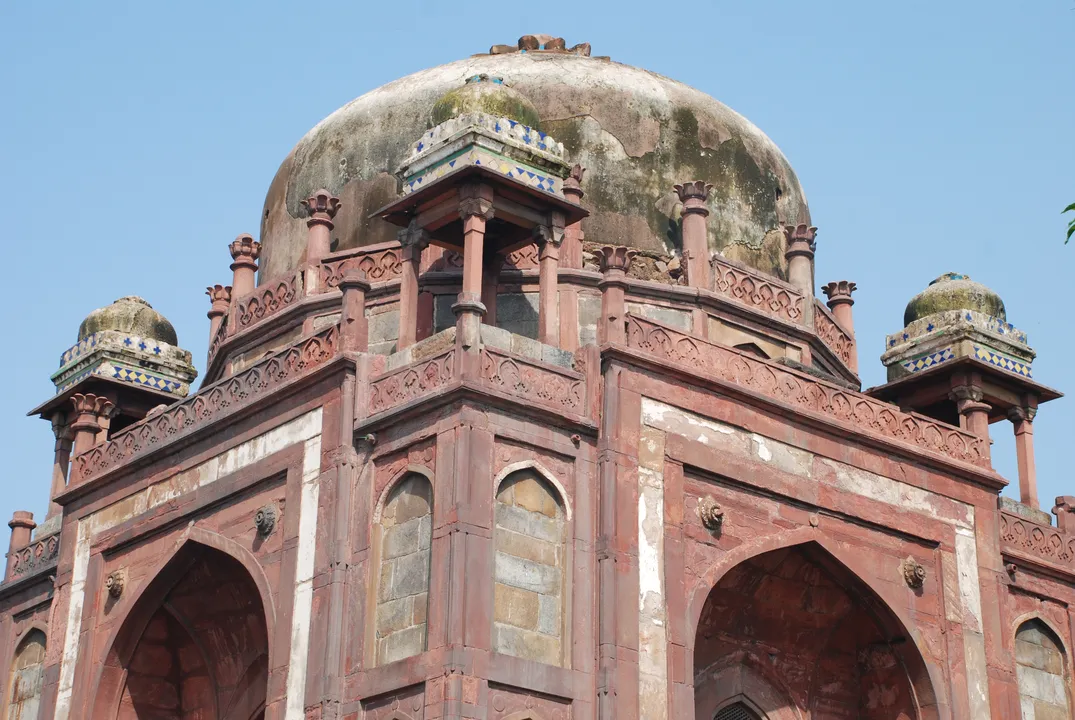
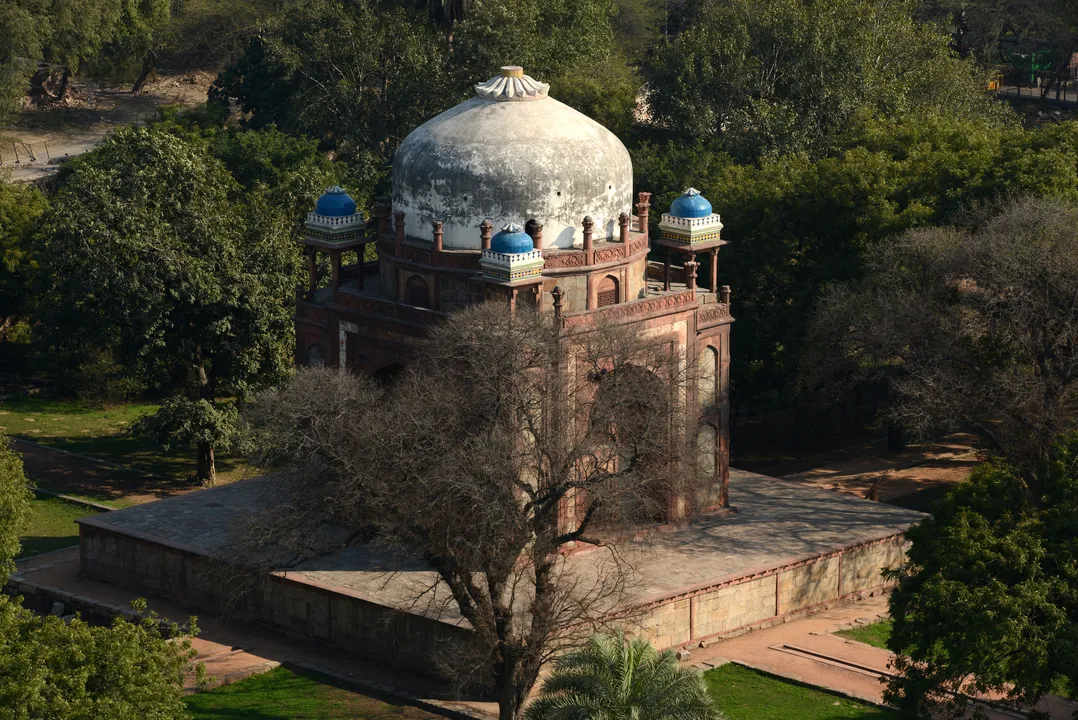
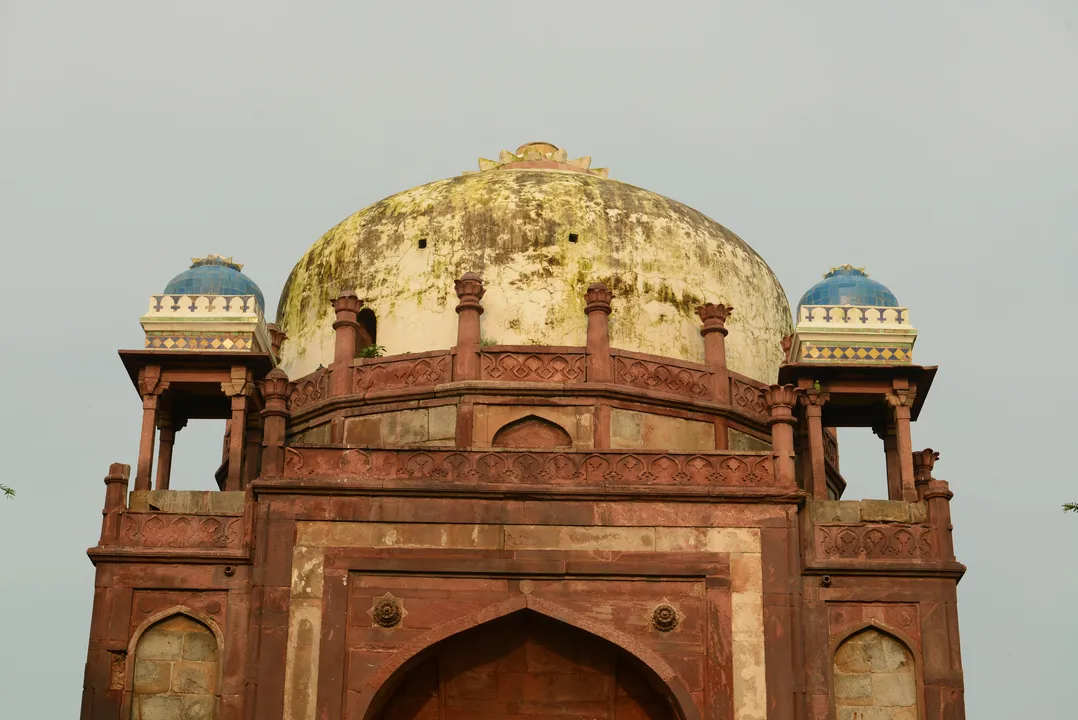
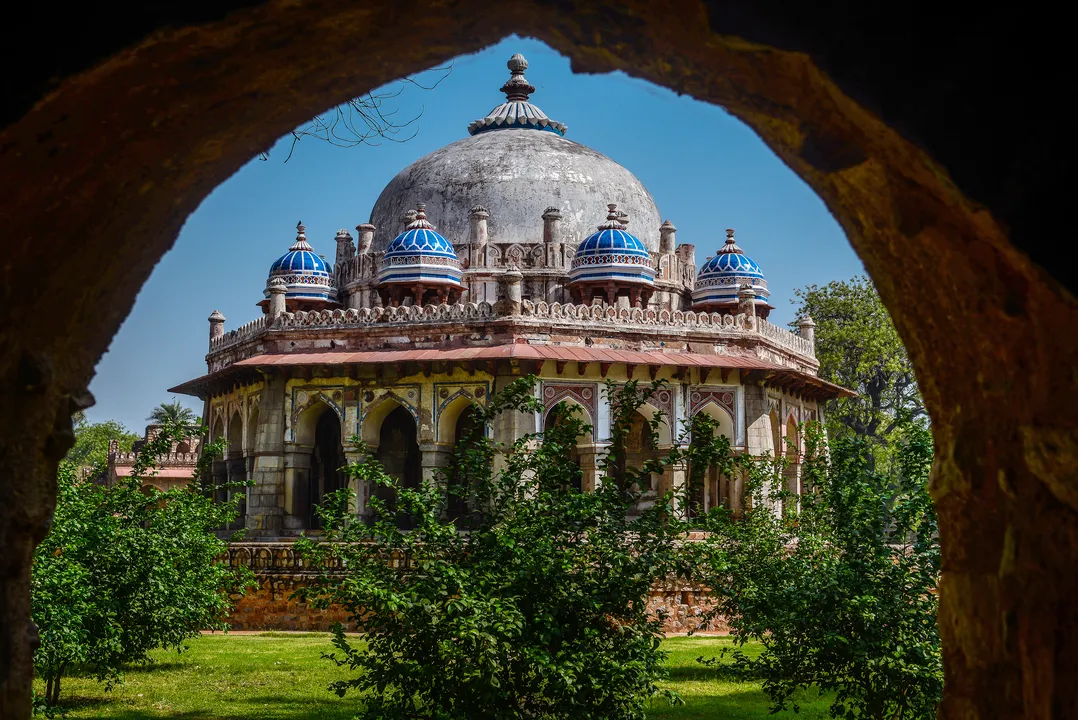
The removal of cement plaster from the domes of the canopies revealed that the canopies had once
featured glazed tiles.
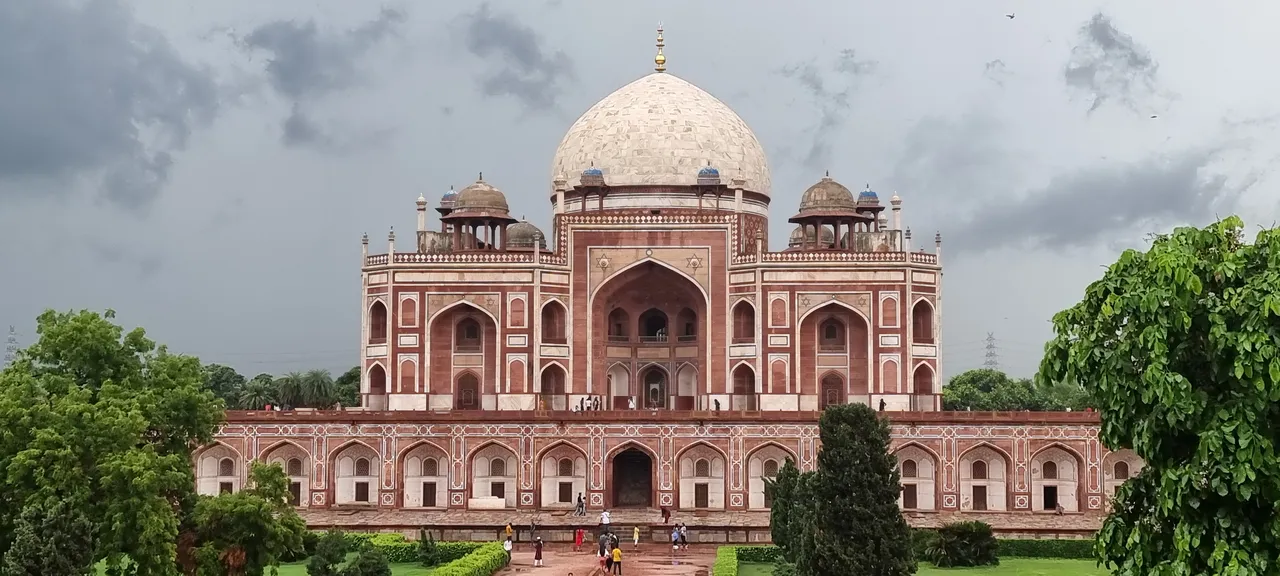
These were covered with layers of cement, as the team had seen with Humayun’s Tomb.
Given the team’s experience conserving Humayun’s Tomb, these tiles could be restored wherever
missing, and repaired with gypsum and lime mortar.
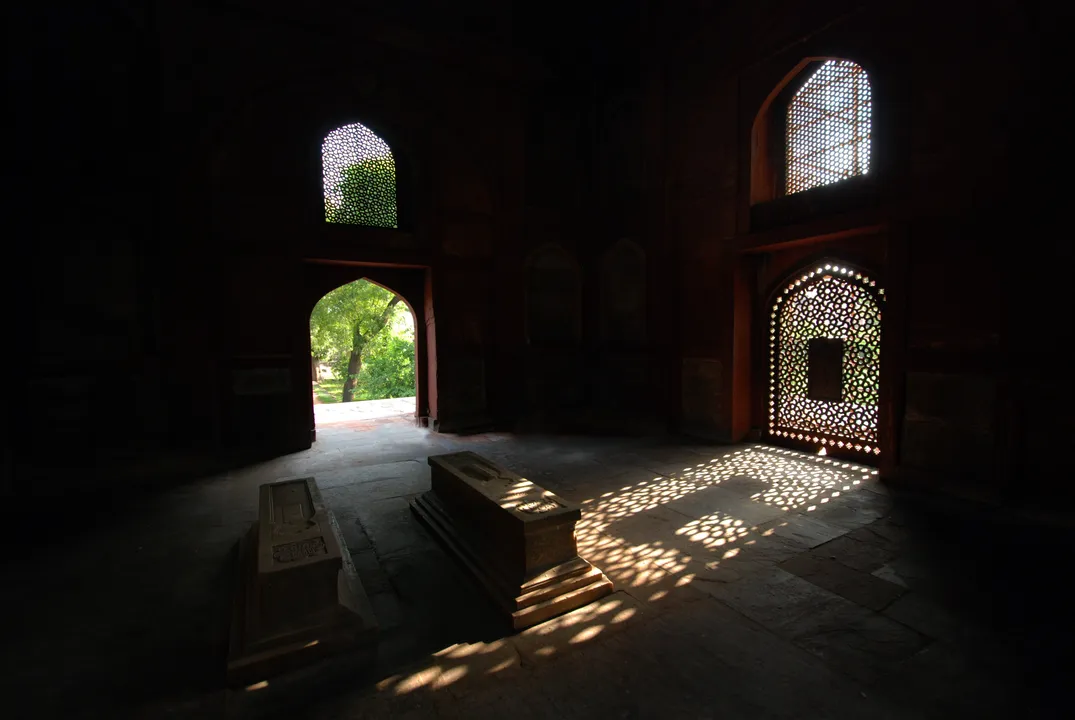
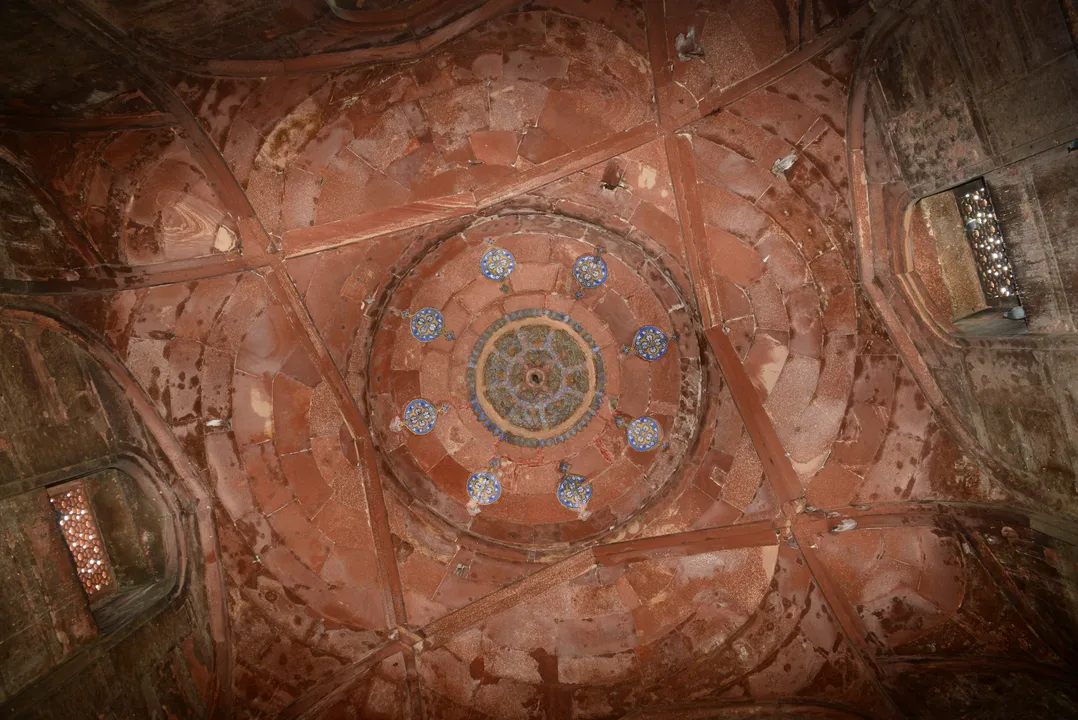
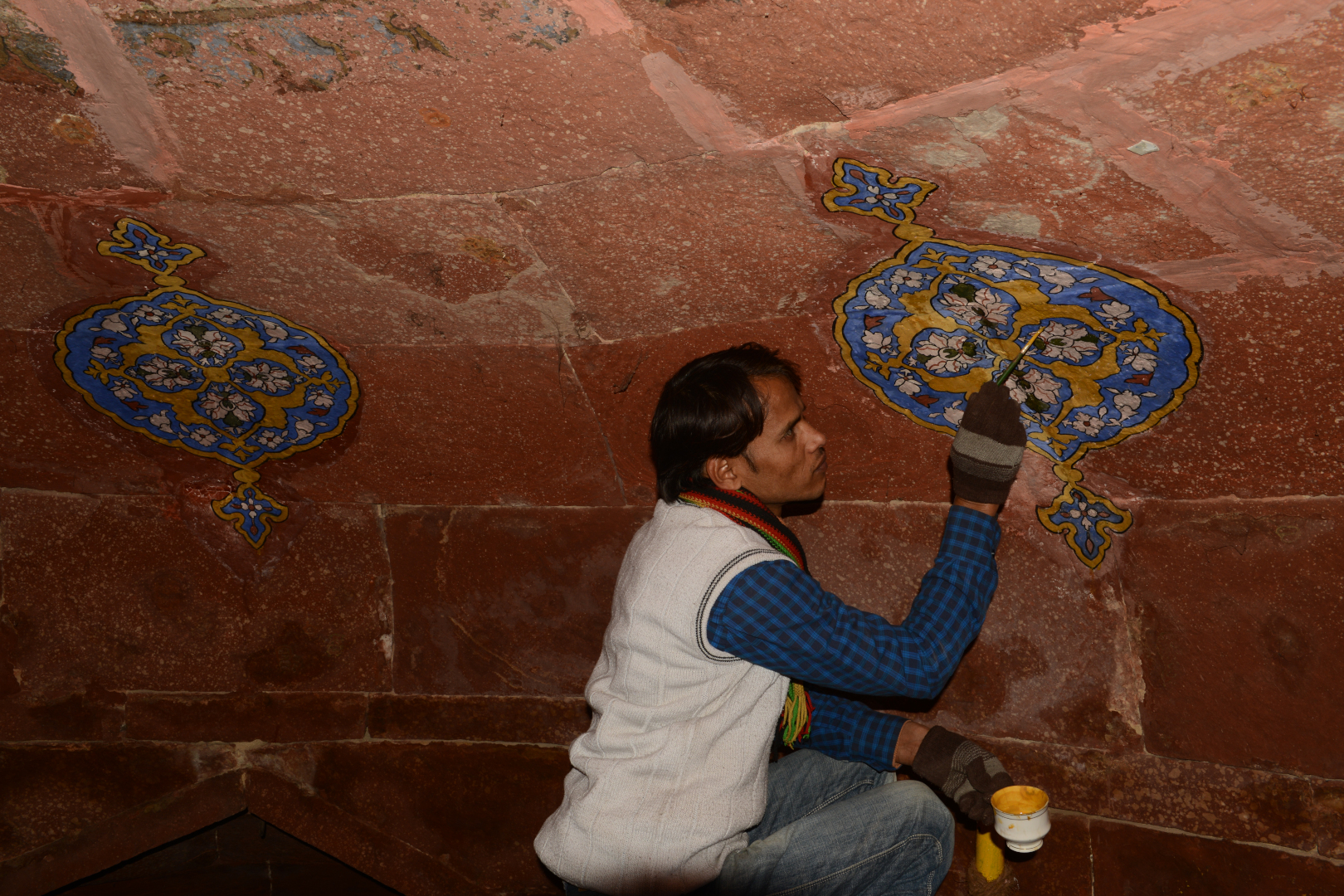
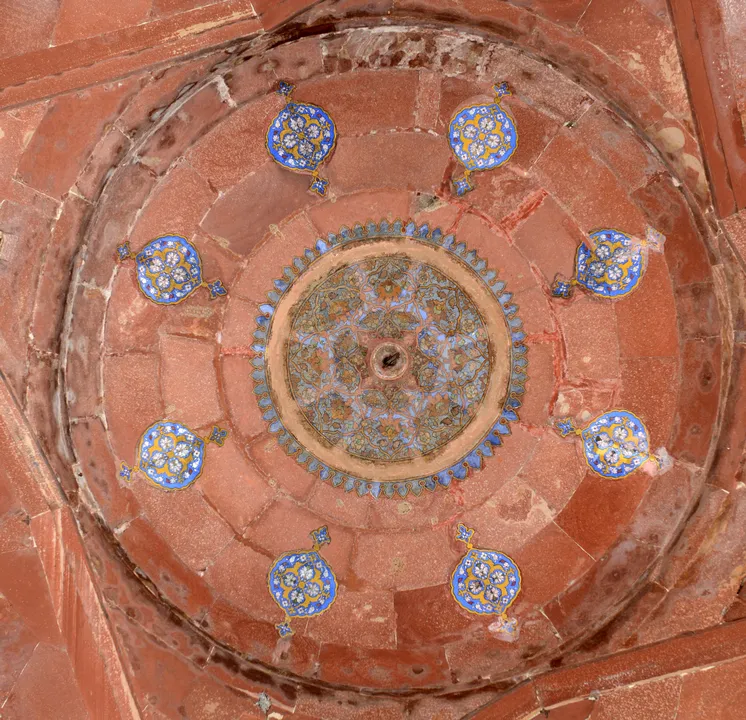
On cleaning the internal sandstone surface, craftsmen discovered stunning, colourfully painted
decorations on the stone surface.
These were carefully documented and cleaned using traditional methods.

.webp.nu)