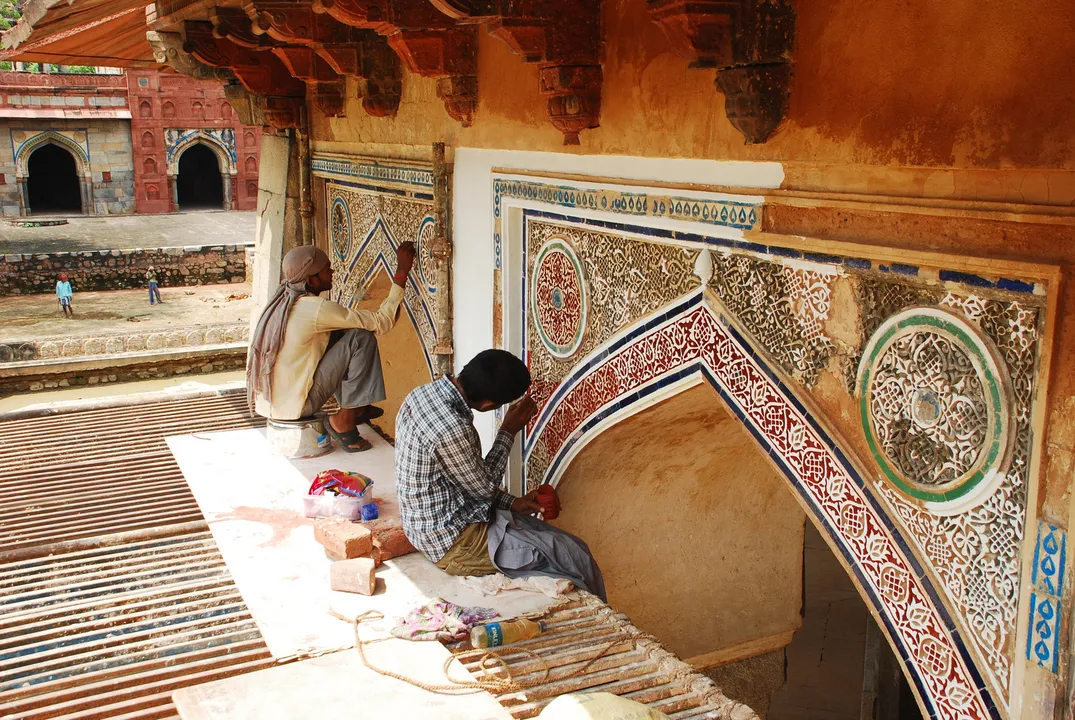
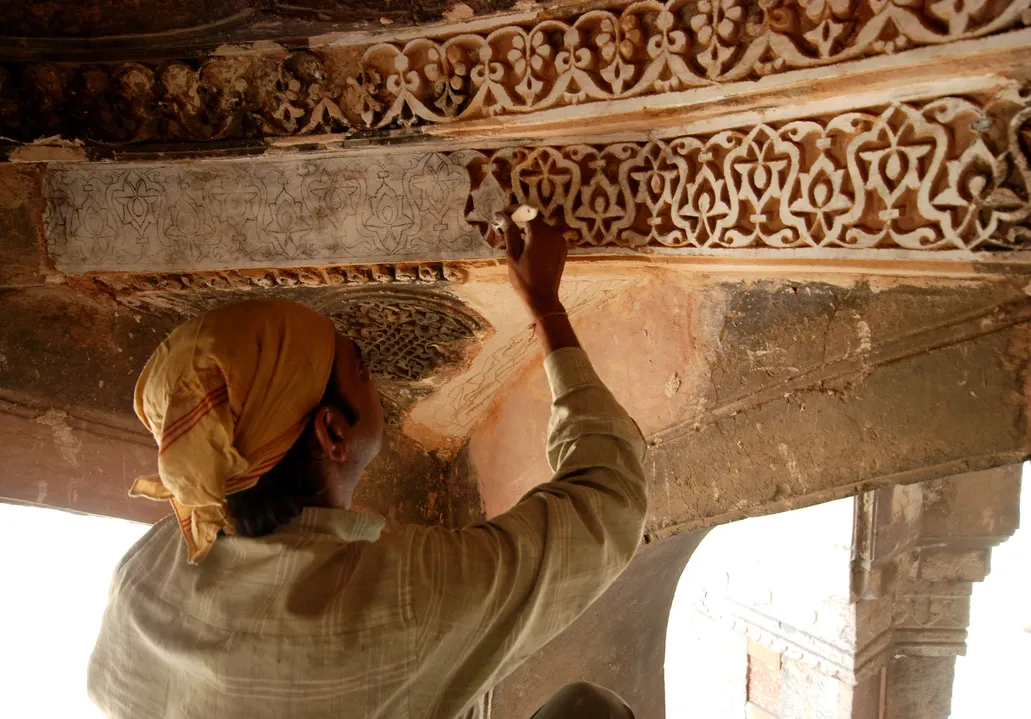
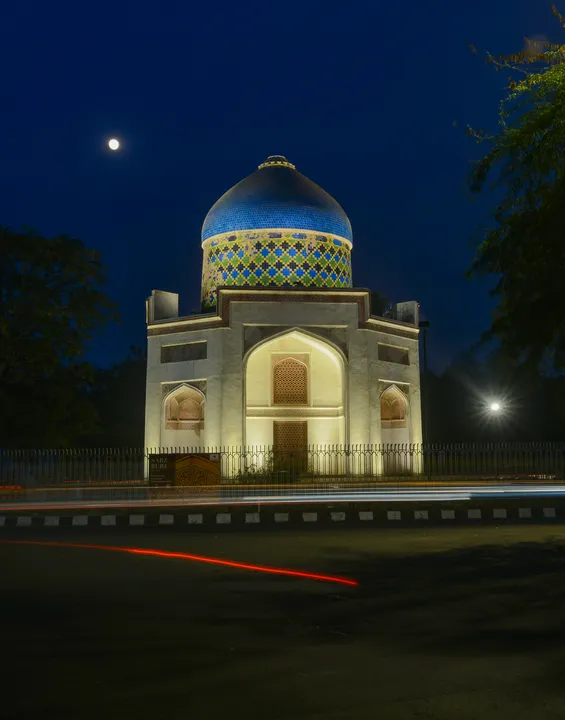
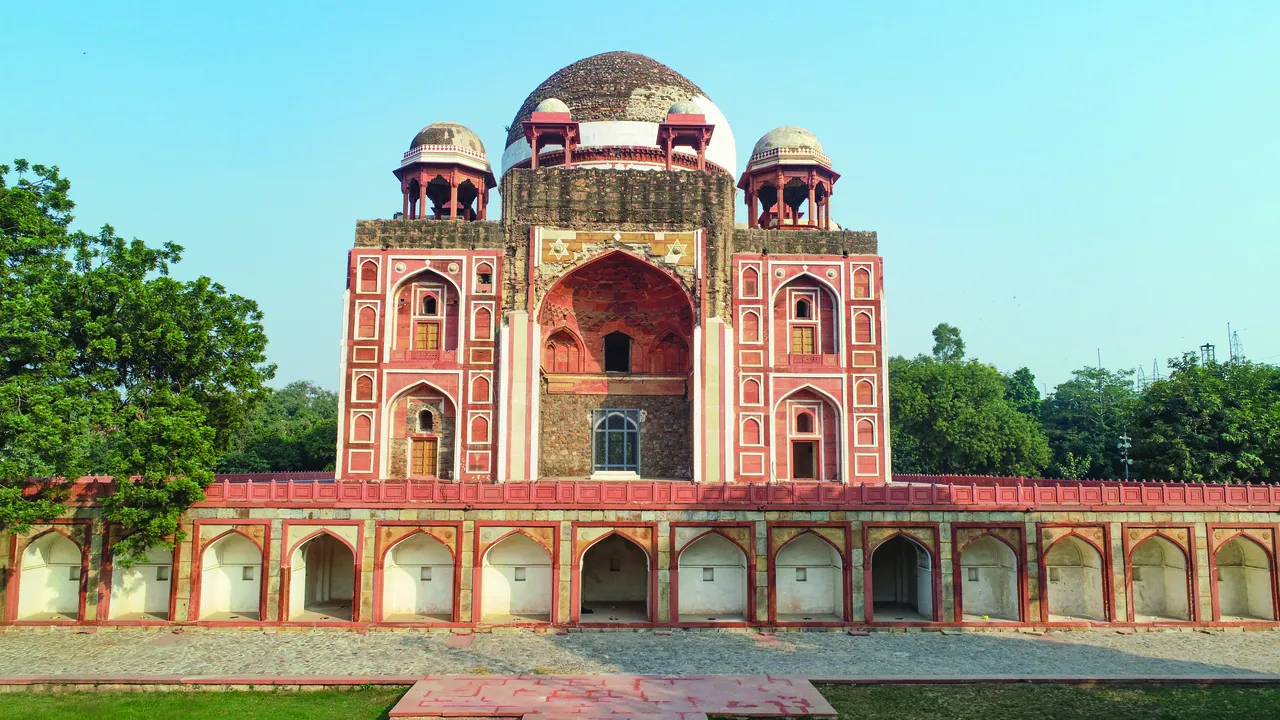
Conservation works focussed on restoring the ornamentation where evidence of original details is
known.
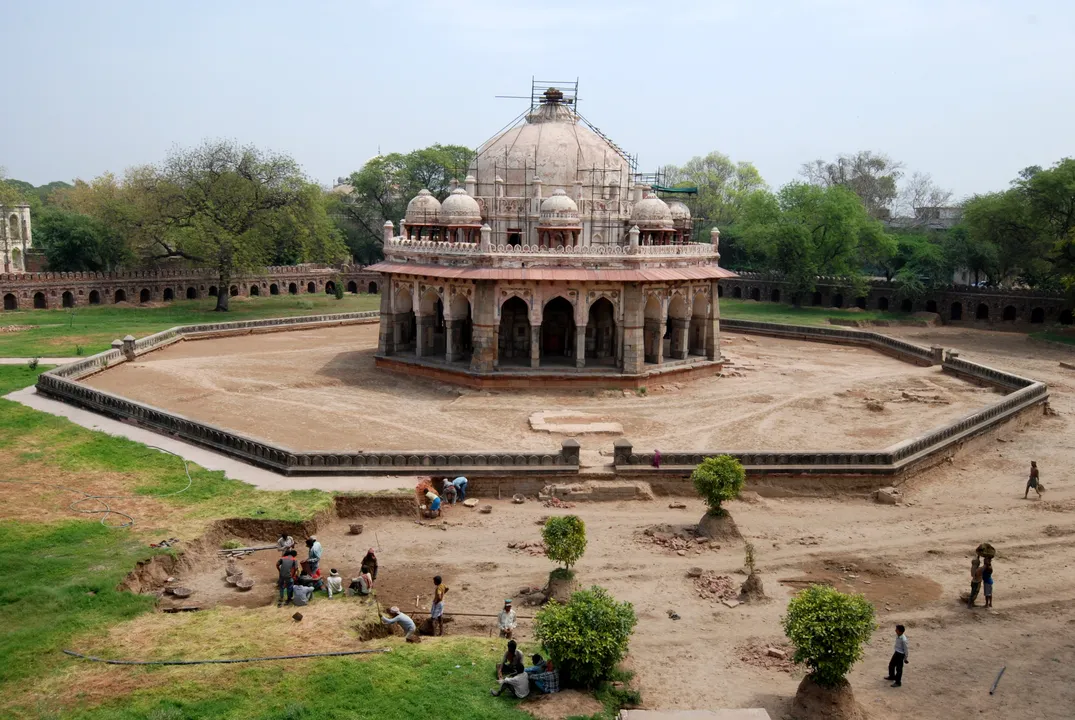
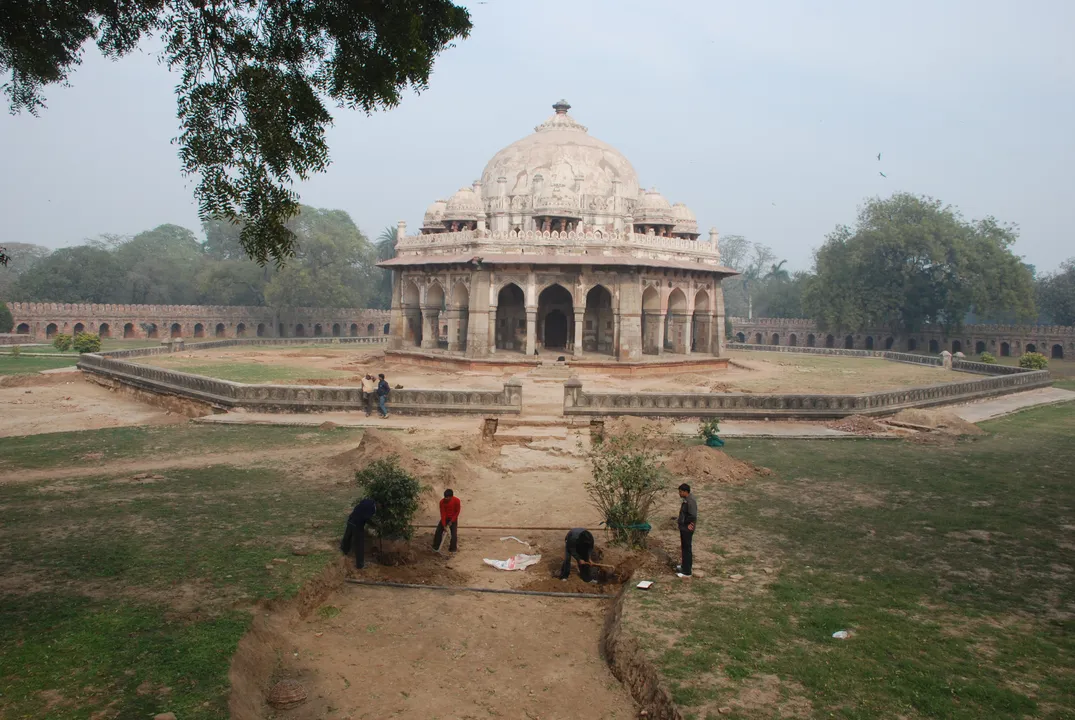
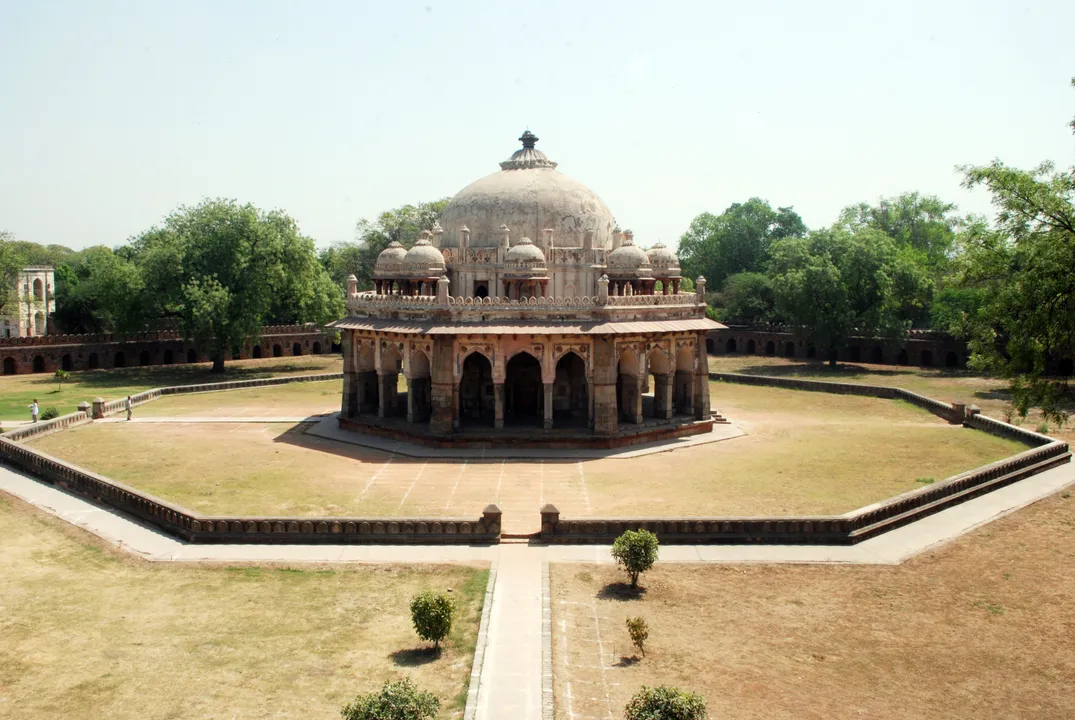
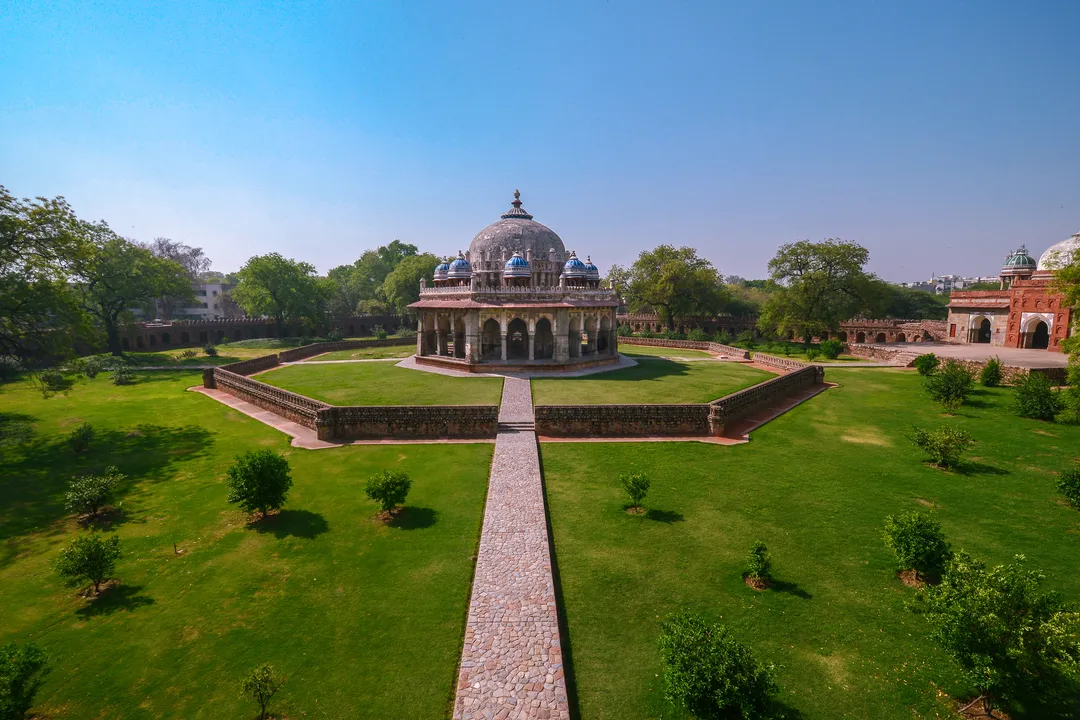
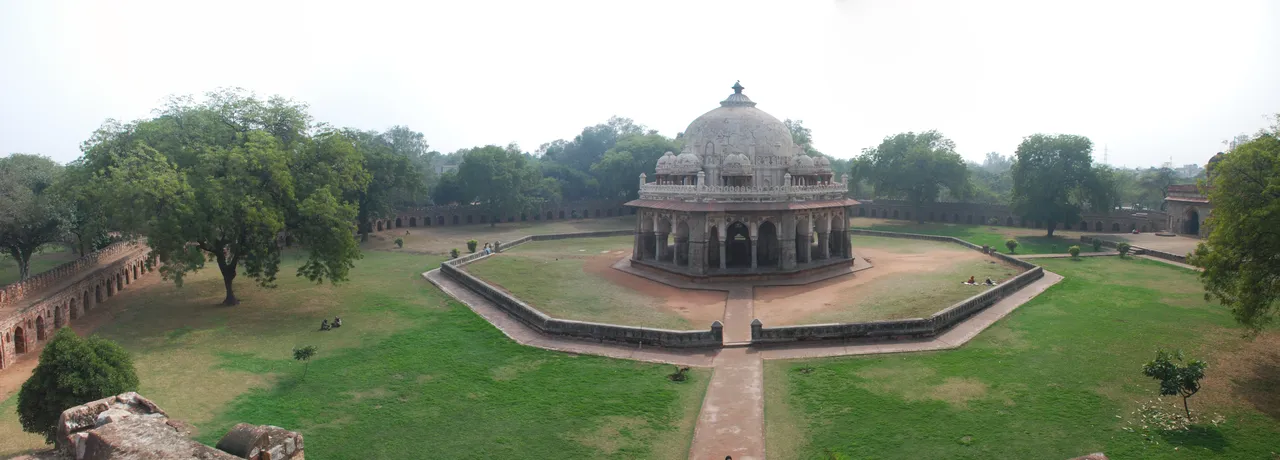
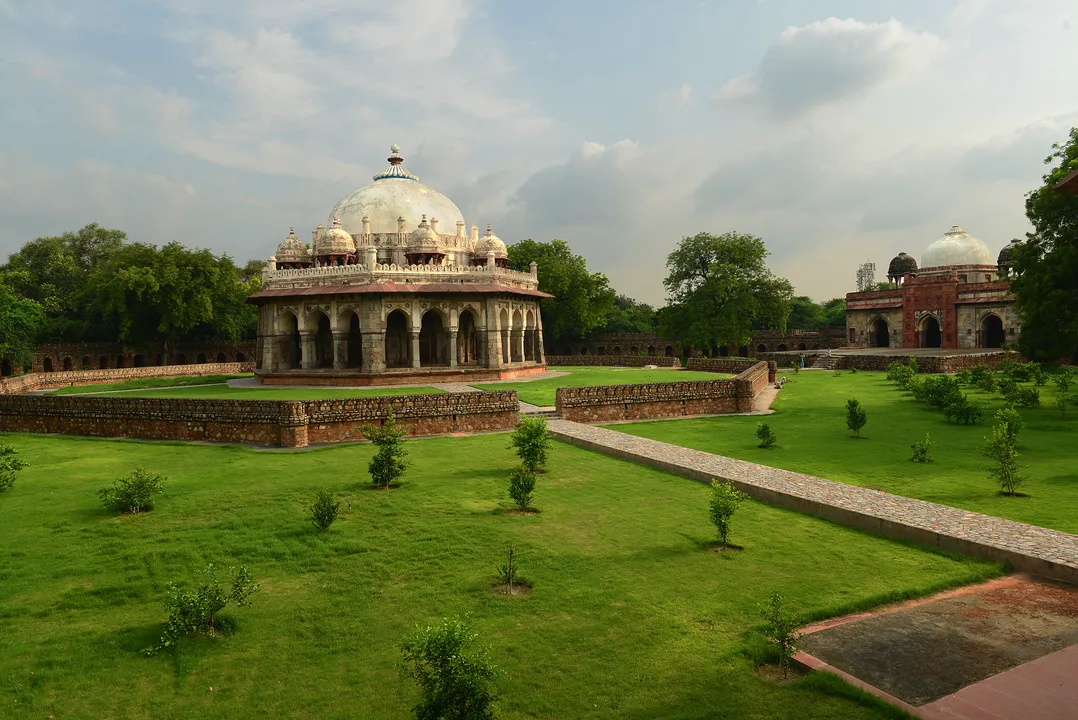
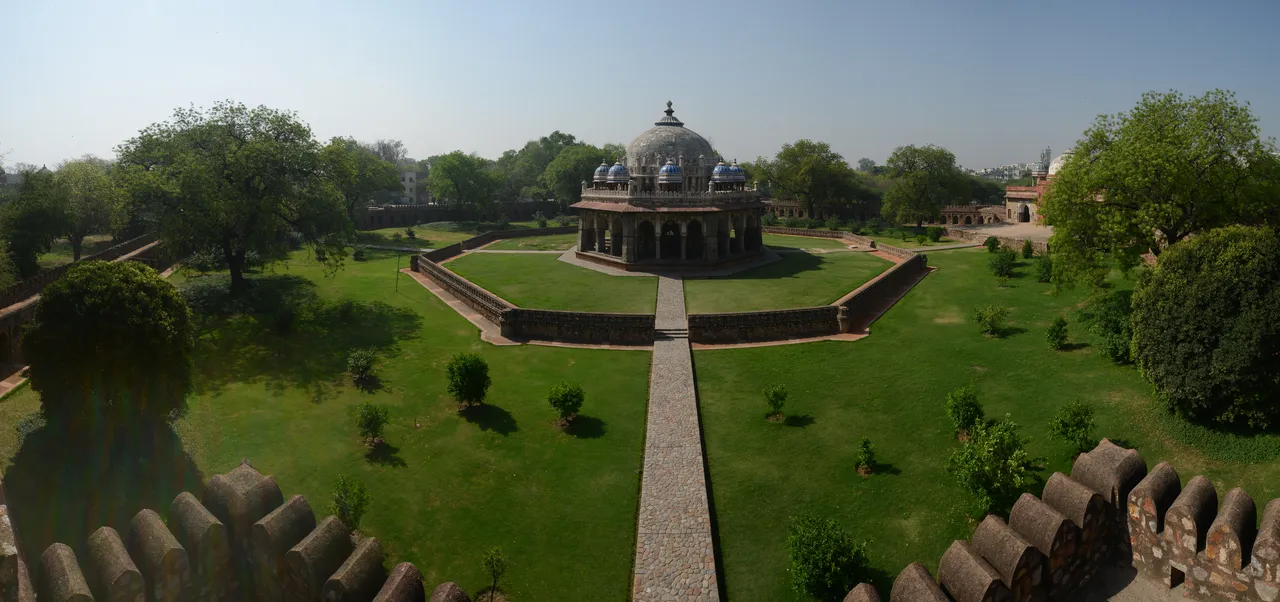
The discovery that the outer garden was originally 4’ below the levels of the garden that surrounds
the tomb required 125,000 cubic feet of earth to be manually removed to restore historic levels.
This revealed several hundred terracotta objects, in addition to architectural elements, as well as
the arcade of the enclosure wall, which is now once again visible as intended.
In order to ensure no damage to underlying archaeology occurs this work was carried out manually.
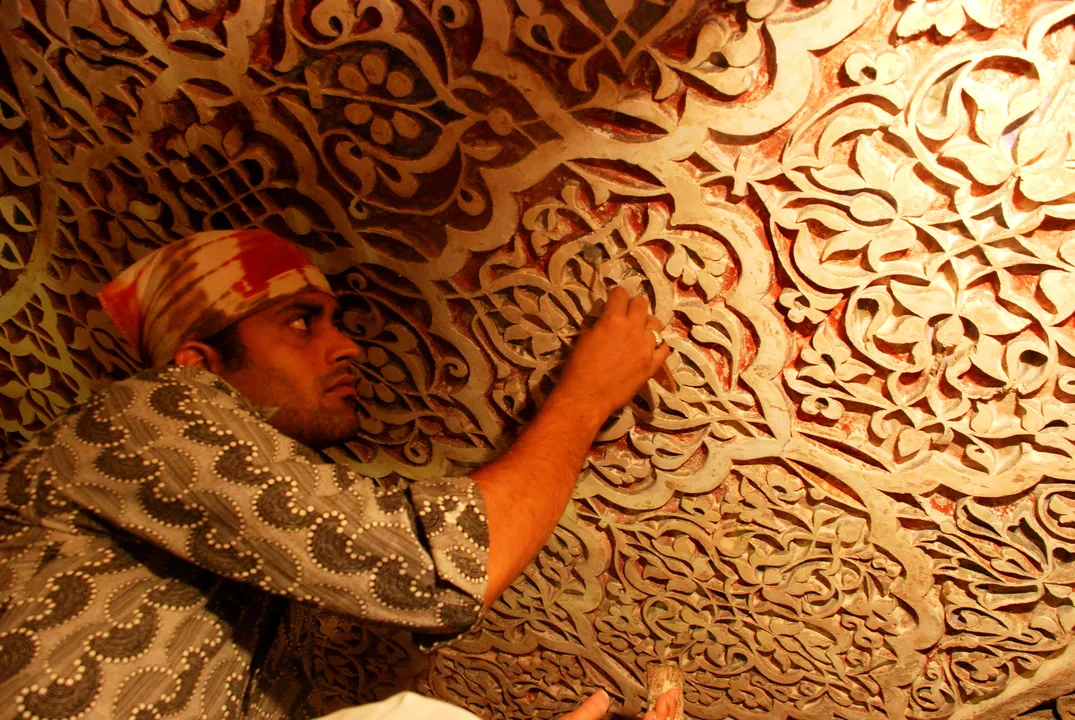
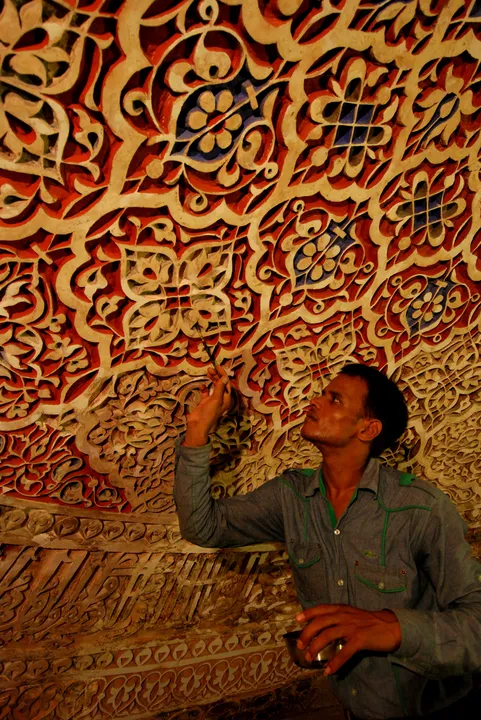
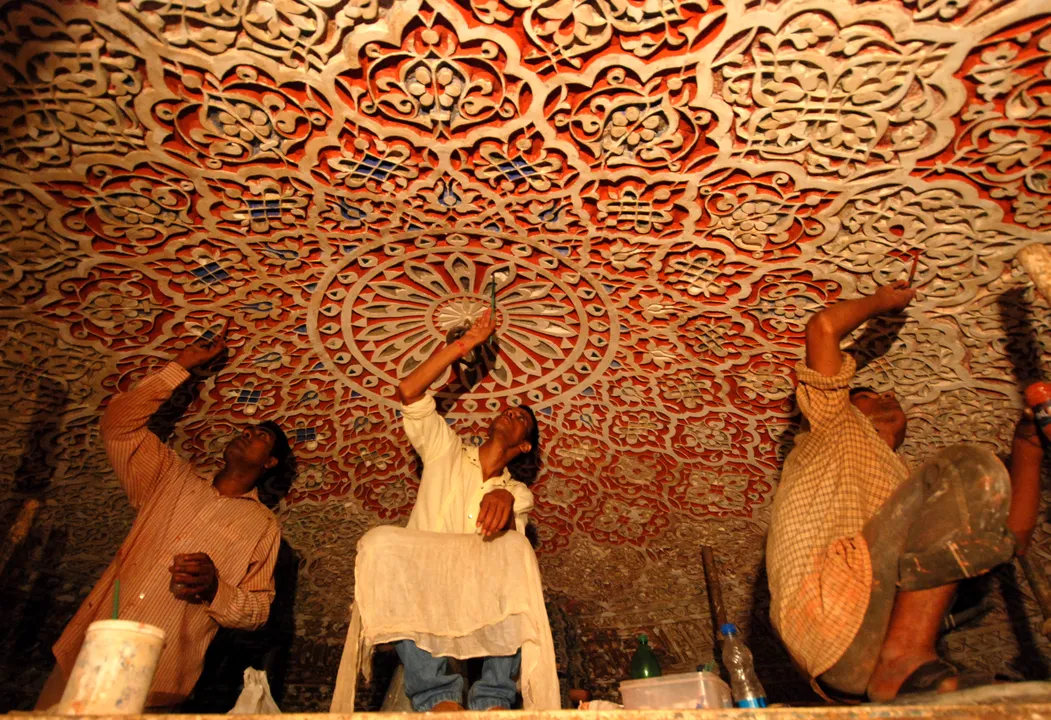
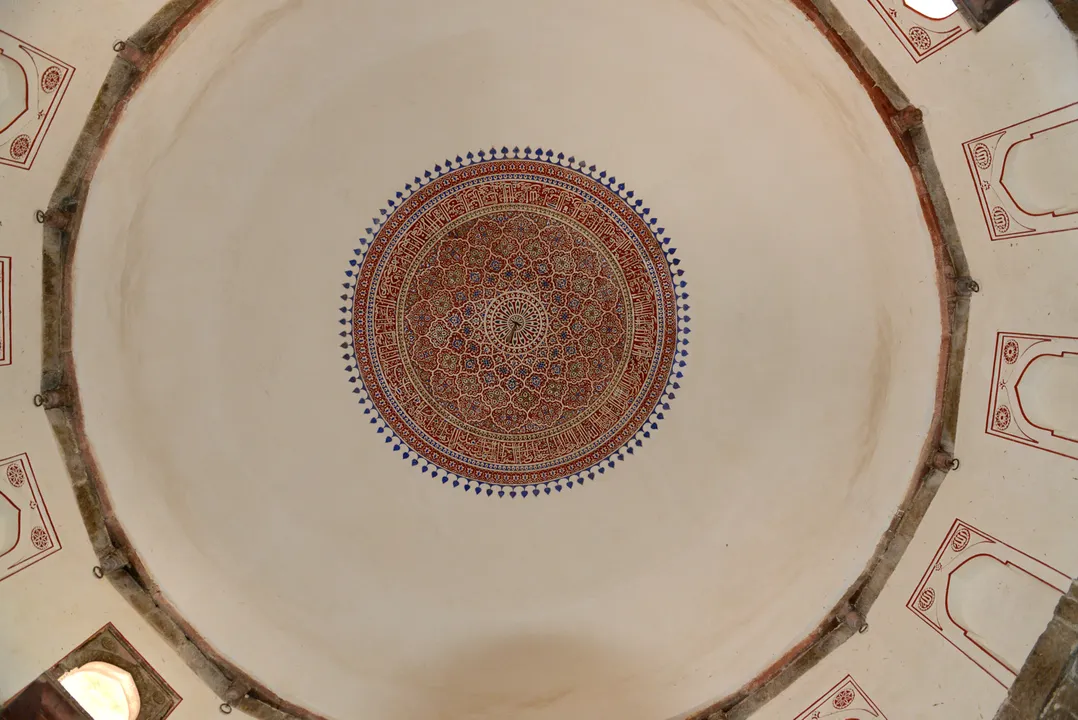
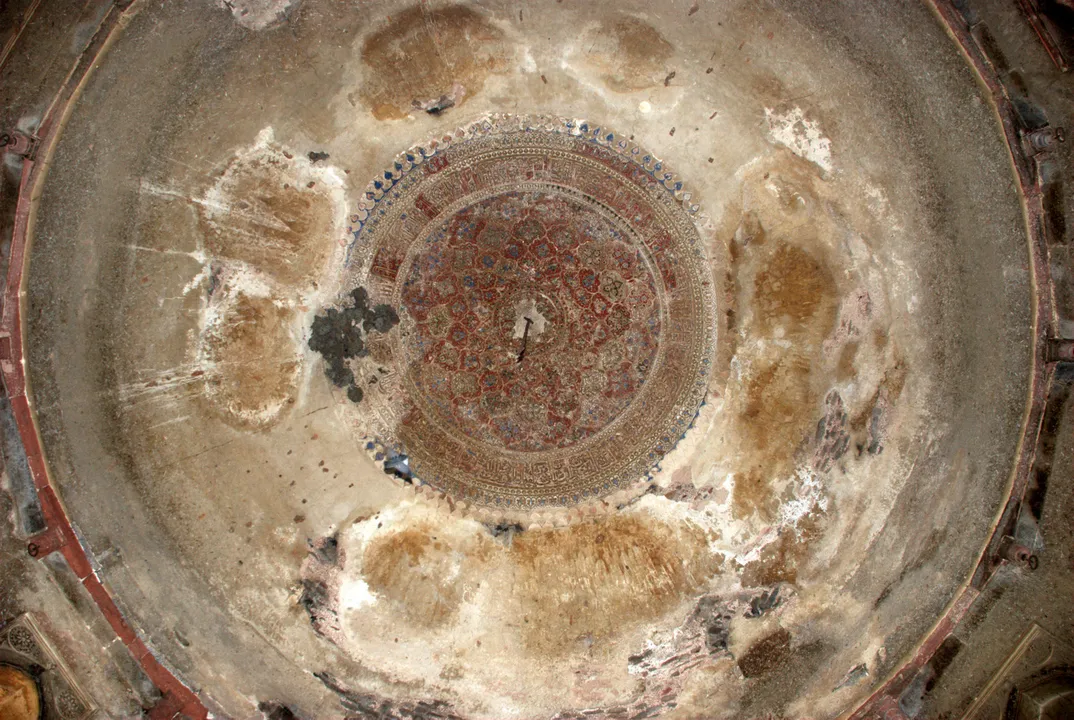
The ornamental ceiling of the dome required extensive careful restoration and with the final
application of lime punning as well as cleaning of stone surfaces with water and soft brushes the
quality of the interior space has improved dramatically.
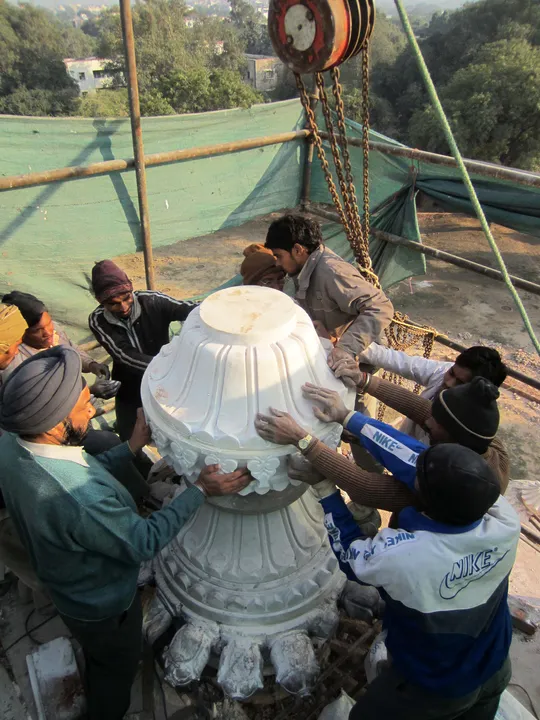
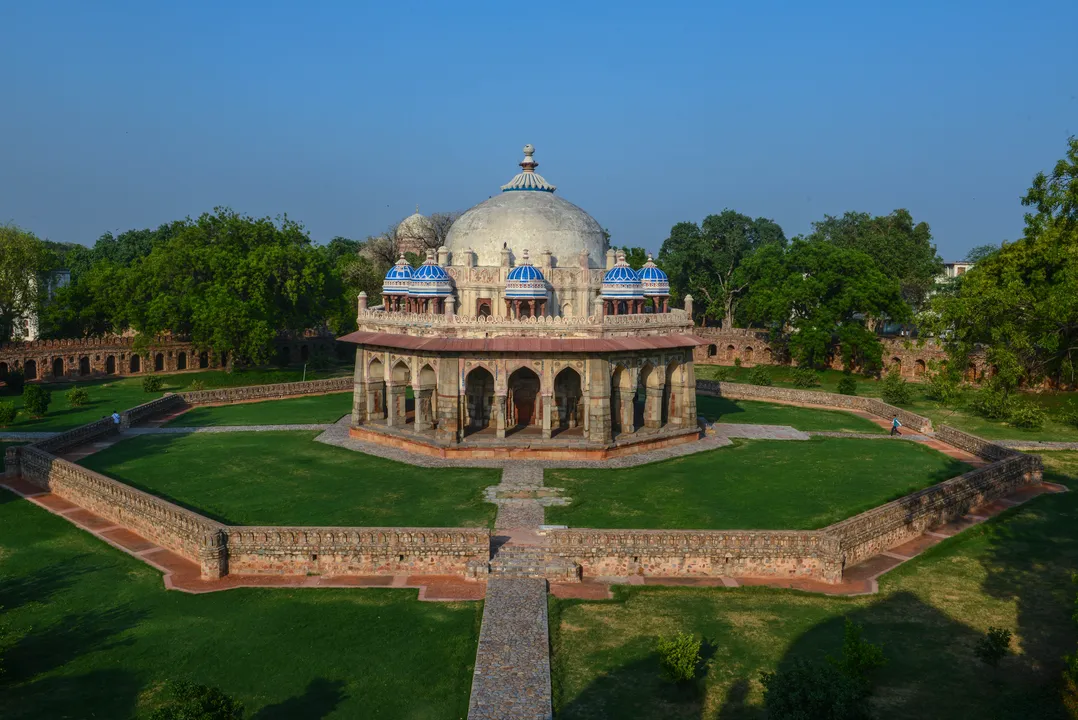
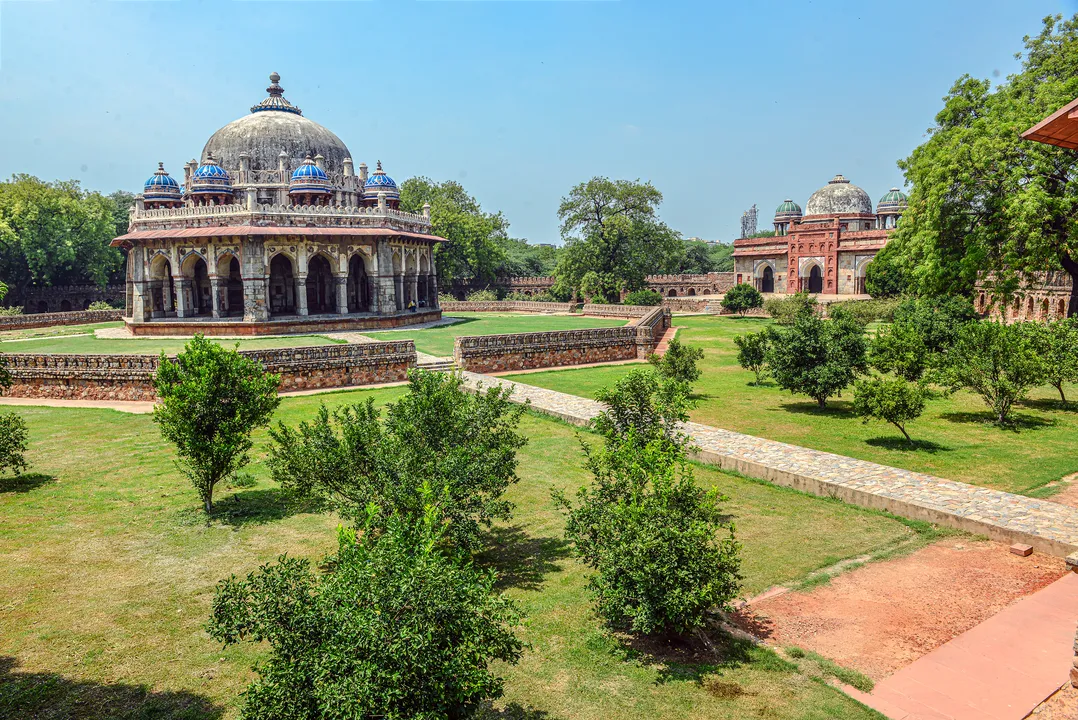
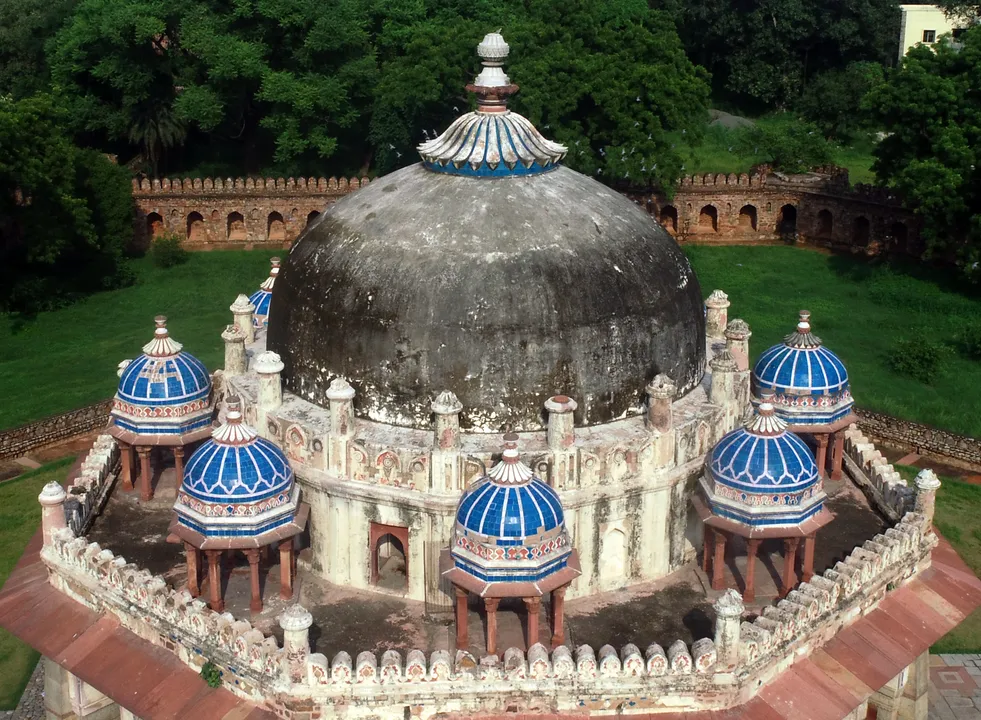
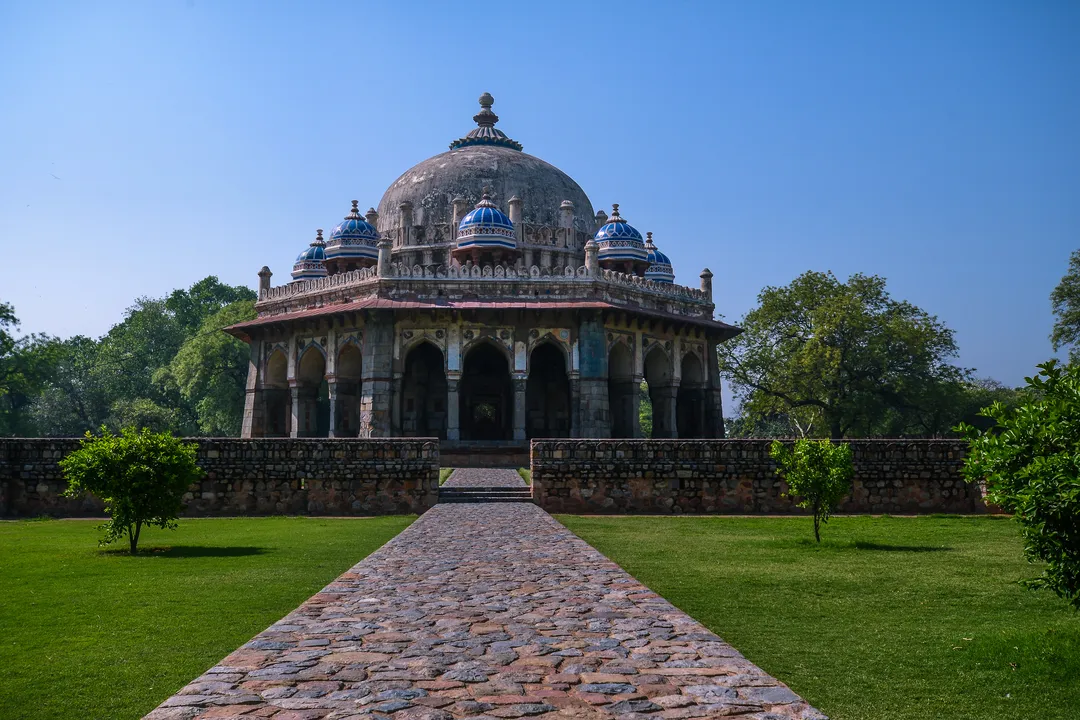
The finial was unearthed during the garden excavation.
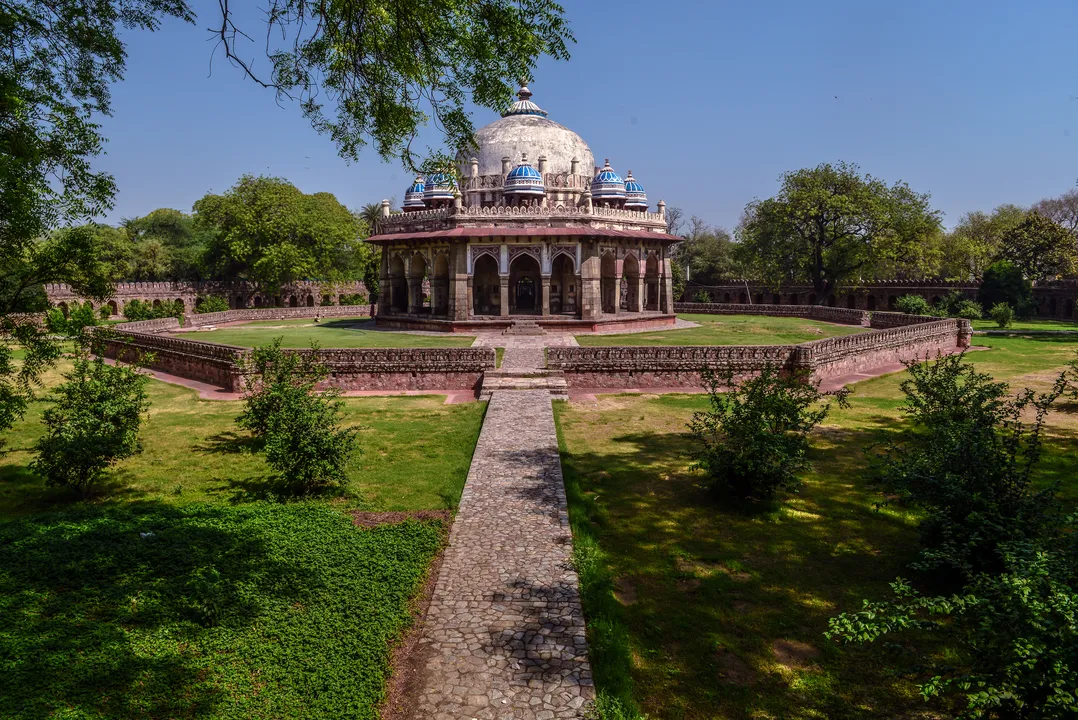
After removing the added layers, the original glazed tile work of the finial have been restored using
matching glazed turquoise blue tiles prepared on site.
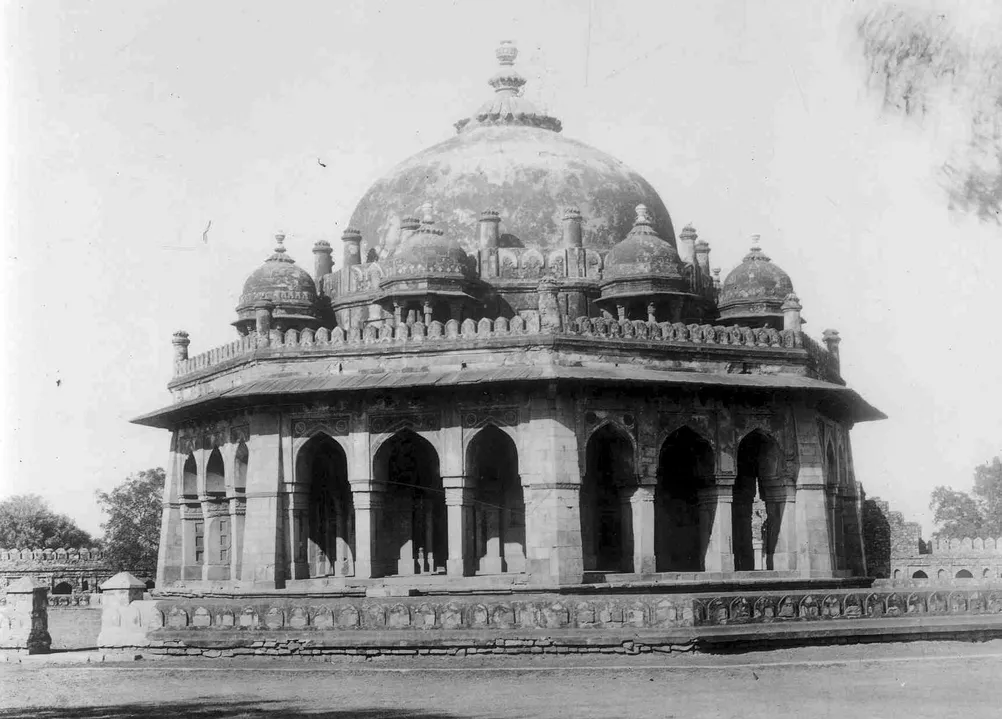
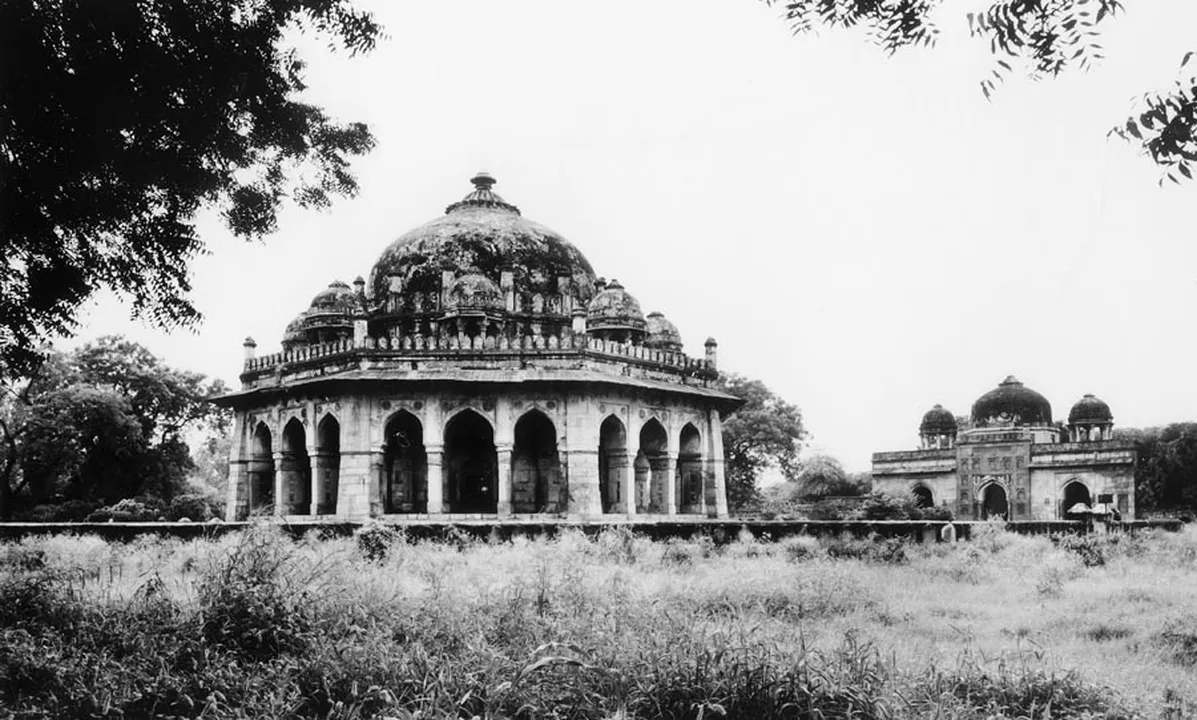
Fragments of the finial, visible in archival photographs were discovered during the earth removal and
used to carve out new elements carefully matching the original.
Fixing this 3000 kilo finial was a major challenge for the master craftsmen.
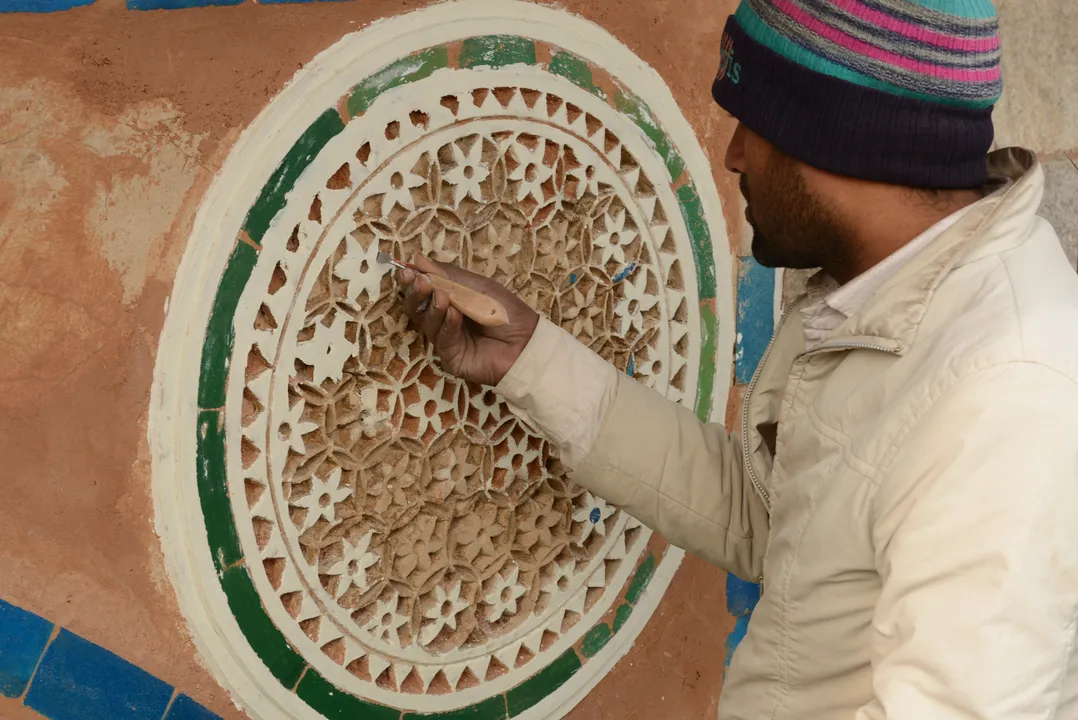
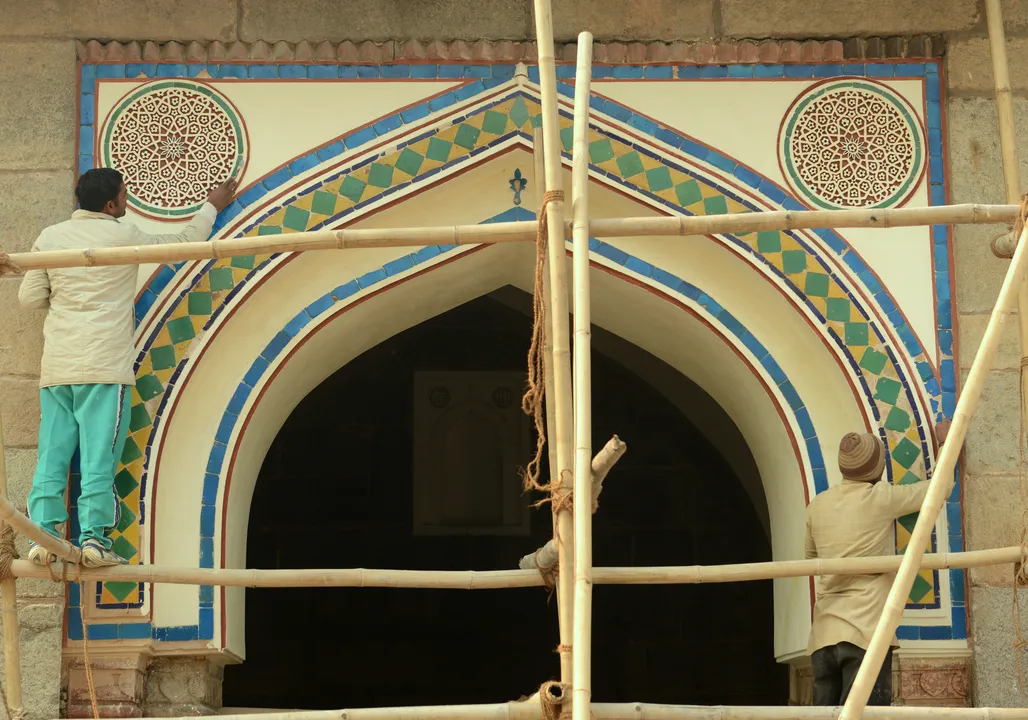
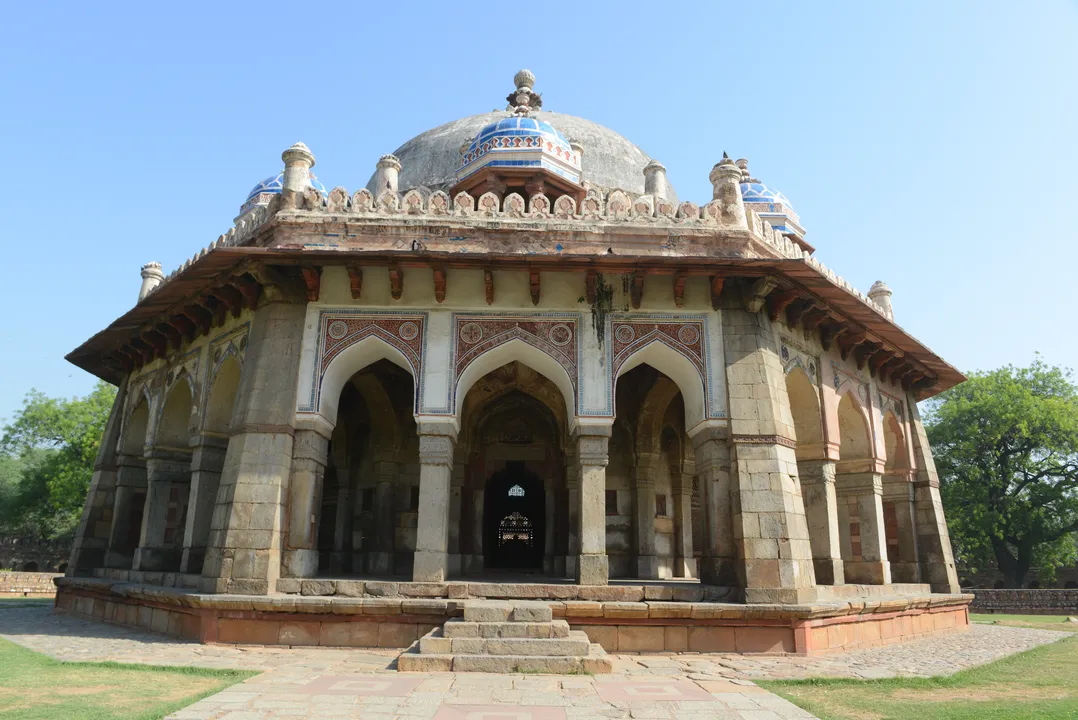
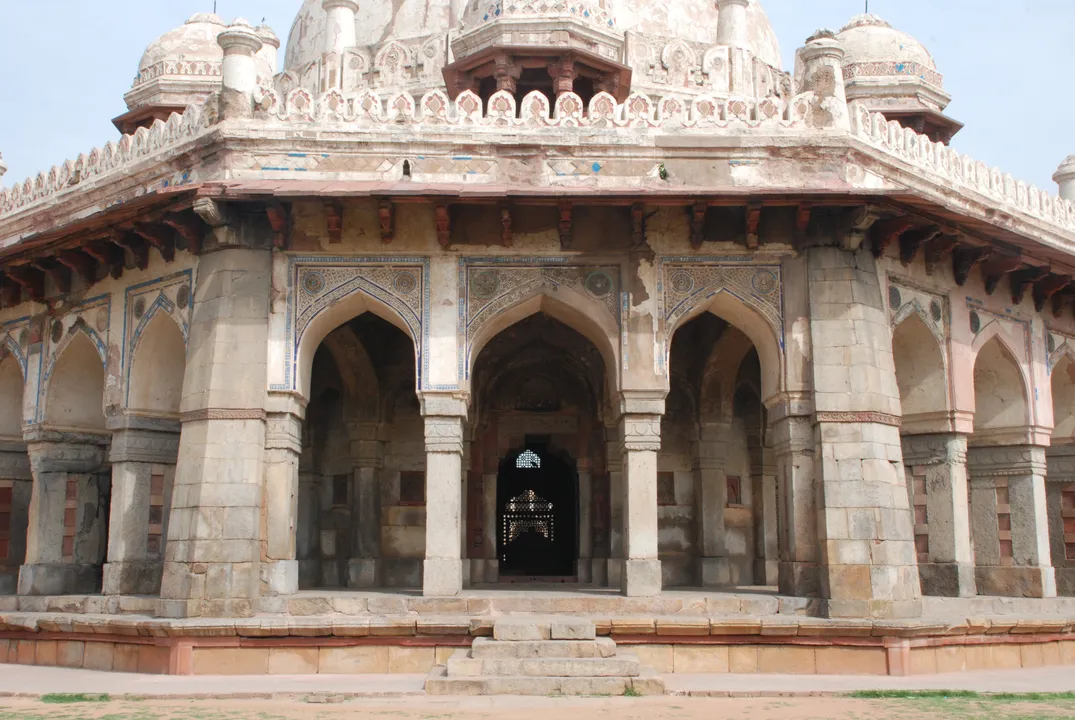
Ornate medallions of incised plasterwork and ceramic tile inlays decorate the spandrels of all
arches.
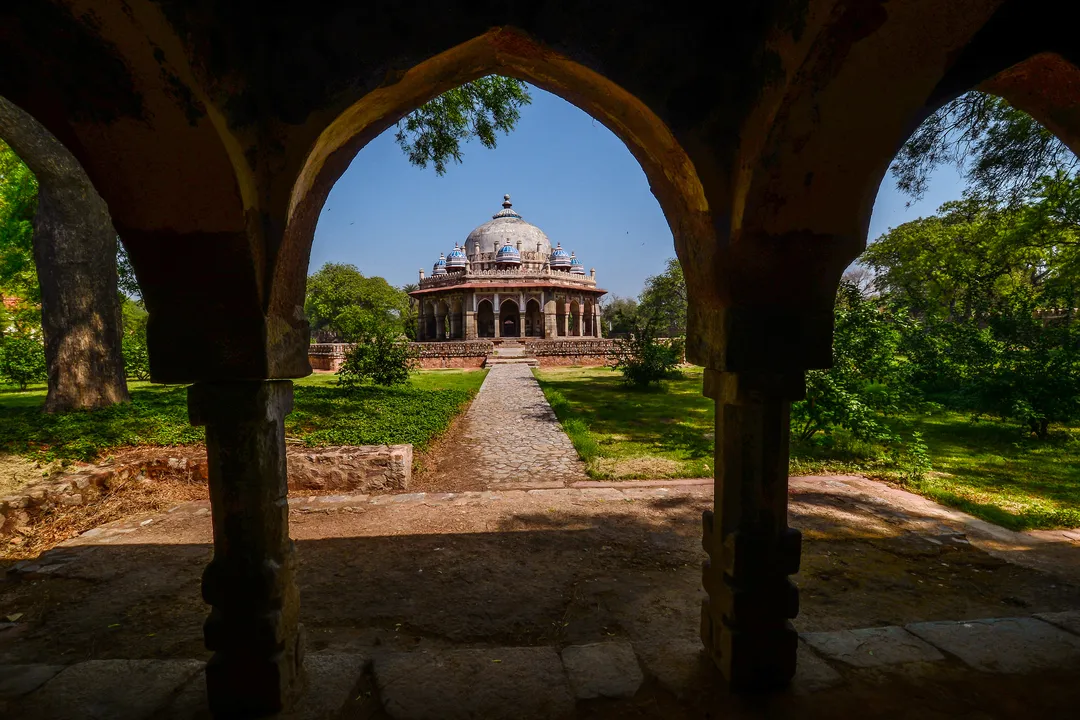
This significant structure stands out due to the liberal use of ornamentation such as plaster work,
glazed tiles, marble finials and stone lattice screens.
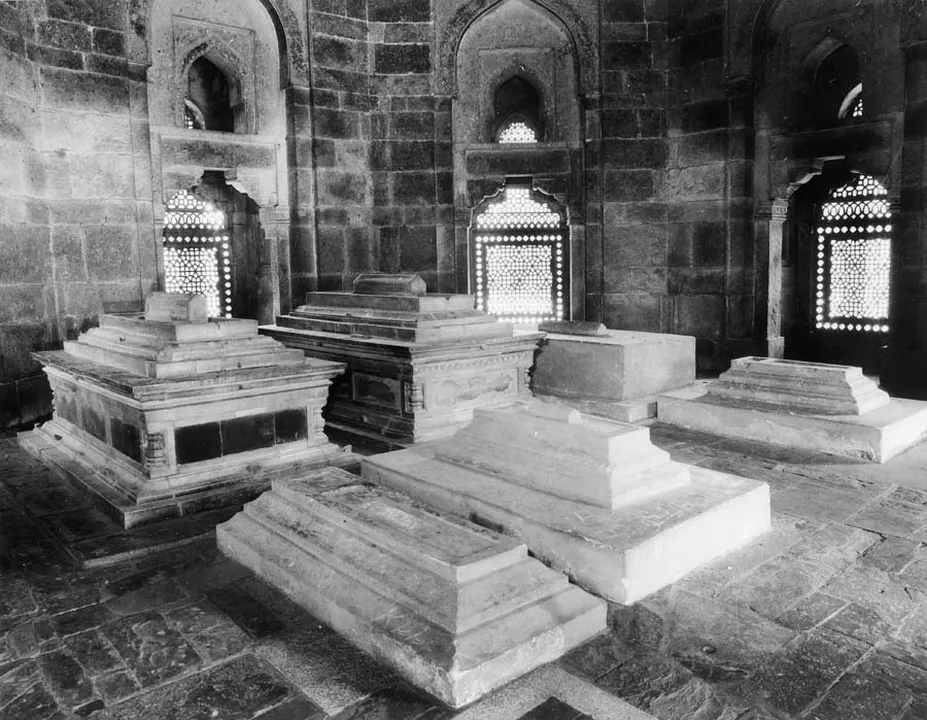
Stunning incised plaster work is visible on the ceiling and its arches.

.webp)
.webp)
.webp)
.webp)
.webp)
.webp)